
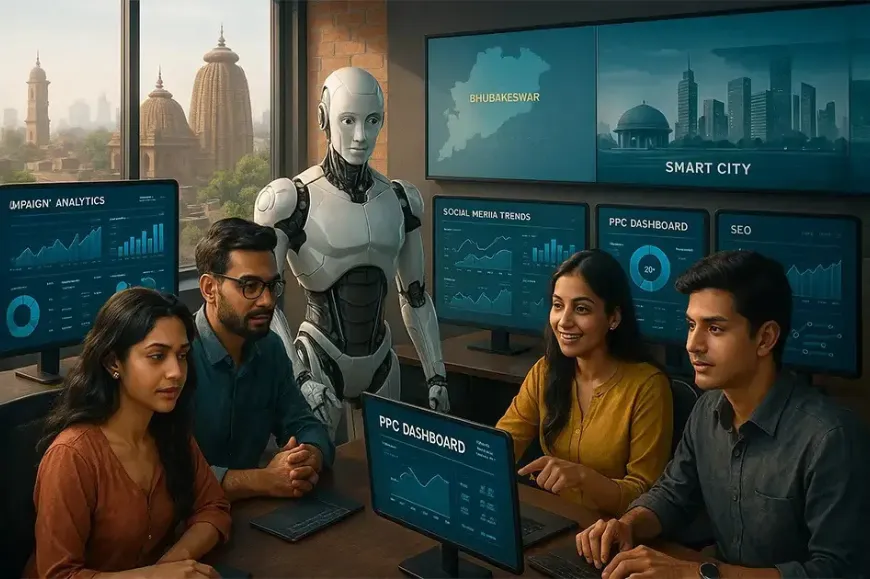
From data analysis to ad optimization, see how AI-powered workflows are reshaping digital agencies.
How AI is Killing Traditional SEO & What You Should Do About It
VERIFY - Check if first paragraph directly addresses the claim.
Date: 04 - 29 - 2026
Time to read: 8 minutes

[ Table of Content ]
SEO as You Knew It Is Gone
Do you remember when SEO was simply stuffing a few keywords, building links, and waiting for the Google ranking to go up? Well, not anymore. SEO is now the new frontier, governed by Artificial Intelligence tools. With search engines overhauling and transitioning into effortless information retrieval machines, your traditional optimisation approaches are dead.
Everything is changing. Google, once a directory of links, looks set to be turned into an information processor that provides results even before a user clicks on anything. If you are still clinging to long-gone strategies, traffic to your website is diminishing.
There is hope. The optimism is that SEO is not dead, it is changing. To keep on the top, you have to keep pace with the changes. The question we will now address is how AI is disrupting SEO, the reasons your previous strategies have become obsolete, and what needs to be done to succeed in an AI-centric environment. For the deeper look behind the "is SEO dying" question, go inside Google's AI-powered revolution.
How AI Is Restructuring Search Engines
At first, search engines were quite easy. You type a question, and it displays ten blue links. Click the link that you find most interesting; it's that simple. Now? Everything has changed; AI chooses, often without any help from the customer, what consequences they will see.
Now Google doesn't narrow down its focus to keywords, instead, it pays more attention to search intent. To understand the context behind a query and automate answering questions, AI does not rely on exact matching phrases. AI reads the context in which the keywords are given.
For instance:
- Old SEO: "Best smartphones under 10,000" → An AI would pull articles swamped with keywords.
- AI-driven SEO: An AI system identifies purchase intent, gathers information from various databases, and showcases comparative shopping results straight within the search results.
If your website fails to structure its content in a way that illuminates user intent, it can be very hard for you to rank.
Suggested article:What AI Is
Doing Right Now in Digital Agencies
Zero-Click Searches Are on the Rise
Here's a kind of alarming statistic: Over half of Google searches do not lead to a single click on another website. Google is more and more limiting its users to its products and services. This is because of:
- Featured Snippets. Answer boxes or snippets above the organic results which contain potential answers to the user's query.
- People Also Ask sections. Expanding Q&A blocks that add a question and more to keep the user even more engaged.
- Knowledge Panels. Summarised extracts presented by Google from reputed domains.
- AI Summary Box. Replaces organic results with AI-generated summary boxes.
So now websites are getting less and less clicks. Users are getting fewer and fewer clicks. If your trump card SEO strategy is still Google users clicking on the Google link, then you are losing the battle before it has even begun.
Decline of Old SEO Strategies and Techniques
A lot of the traditional SEO strategies and techniques which proved useful a couple of years ago, are no longer in trend. Here is why each of the big ones is losing ground fast.
- Content keyword density has a zero tolerance policy now. Not that long ago, excessive use of the keyword phrase "best digital marketing agency in Bhubaneswar" would get you to the top of Google results without any effort. But now? AI systems forbid keywords to be used unrealistically, disallowing one to use excessive keywords. Search engines favour content that is naturally written and socially spoken in such a way that it straightforwardly addresses the question posed.
- Backlinks are now peripheral in importance. Links from other websites pointing to your website were previously the grail in the world of SEO. AI-powered search now emphasises quality over quantity - one backlink from a reputable source is better than several ones from unreliable sources, and valueless content cannot be saved by links.
- AI summaries are replacing organic rankings. Google tends to answer questions with its AI-generated summaries because it likes to fetch all relevant data from different places. If the content can't be formatted to pull out needed information as an answer, you will be evading the searchers.
- Personalised search is taking over. AI gets to personalise the search results for every user depending on their past activities, likes, dislikes, and even location. This implies that the standard approach to rankings will not deliver the same results for all users.
SEO nowadays requires a big-picture view of how a site is performing in the context of being the most appropriate available answer, rather than focusing only on being number one.
Rise of AI-Generated Content and Its SEO Impact
AI is sending floods of content on the internet at an unprecedented volume. This is creating two big challenges for brands trying to stay visible in search.
- AI-generated content is everywhere. With AI, uploading hundreds of blog posts becomes a matter of minutes and as a result, makes it much more difficult to stand out than it already was before. But just because a lot of content is available, does not mean that it has to be good, which is exactly why Google is working very hard to filter the AI spam.
- Google's crackdown on AI spam. Google's newest algorithm changes pivot on E-E-A-T (Experience, Expertise, Authority, Trust) to divide quality content from AI-generated rubbish. For your content to rank, it must not lack experience or the shown level of expertise.
Information can surely be generated by an AI, but the following cannot be replaced:
- Opinion and narrative of a real-life expert
- Case studies and emotional storytelling
- Well-researched content with original insights
When it comes to SEO, authenticity overshadows automation.
Steps To Stay Ahead
In an AI-dominated world, how do you succeed in the age of AI search? The answer lies in shifting your SEO philosophy from keyword-first to intent-first, authority-driven optimisation. Our SEO services are built around exactly this new playbook. Here is what separates brands that thrive from those that fade away:
- Embrace AEO (Answer Engine Optimisation). Instead of just ranking for keywords, attempt to provide a clear answer. Organise content under FAQs, how-tos, and direct answers. Add bullets, lists, and proper typography to enhance readability. Shift focus to understanding the user, not just the keyword.
- Implement structured data and schema markup. Add FAQ schema if you want to appear in featured snippets. Use structured data to increase chances of being seen in AI-generated results.
- Create humanised, high-quality content. Make sure the content is insightful and entertaining. Provide true stories and insights from proven experts. Be sure to outsmart the AI content and build your credibility.
- Get ahead by enabling voice search optimisation and conversational queries. Include long-tail keywords and natural language. Respond to prompts in a linked and focused manner.
Conclusion: The Future of SEO in the Age of AI
Even in a world fuelled with AI technology, SEO is still alive and well. You need to learn to adjust because AI is writing a new playbook. Classic strategies don't get the job done anymore. Endless content produced by AI will still lose out to human skill. Search powered by AI is going to be a norm, so get ready.
Brands that adjust will reign supreme. Brands that don't? Will be wiped out completely. So, are you making an effort to change or just waiting to be ignored?
At Oddtusk, we help brands rewrite their SEO playbook for the AI era - combining semantic SEO, topical authority, and AEO/GEO-ready content to keep you visible across Google, AI summaries, and answer engines alike. Explore our SEO services and content marketing solutions built for this new search landscape. Ready to future-proof your organic growth? Let's talk about what's next for your brand.
