Account-Based Marketing India
Most Indian B2B brands treat ABM as a premium version of inbound marketing: more targeted ads, more personalised emails. It is not. ABM starts with a list of specific accounts the business wants to win and coordinates every marketing and sales action around those accounts. The tier of ABM: 1:1, 1:few, or 1:many, is determined by the deal value, not by preference. Oddtusk sets the tier first, builds the target account content strategy second, and runs the LinkedIn channels third. Every ABM programme connects to our marketing automation and CRM integration services.

- Ideal Customer Profile (ICP) definition
- ABM tier selection by account value
- Target account list (TAL) development
- Sales team TAL validation
- LinkedIn Matched Audiences setup
- LinkedIn Sponsored Content and Message Ads
- Personalised email outreach sequences
- Account-level content creation
- CRM account-level tracking setup
- Account engagement scoring
- Pipeline attribution from TAL accounts
- 90-day and ongoing ABM measurement
Inbound marketing seeks volume, hoping for quality. ABM prioritizes specific accounts first, ensuring every marketing action reaches high-value targets directly.
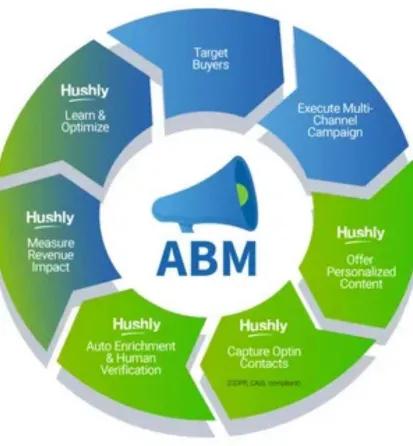
Inbound marketing suits large markets where buyers search broadly, but for niche enterprise sectors, it attracts irrelevant traffic. If your target market is only a few hundred large corporations, inbound leads often turn out to be unqualified. Our ABM approach identifies key decision-makers at specific relevant companies through LinkedIn Matched Audiences and coordinated LinkedIn marketing, ensuring every meeting request comes from a high-priority account. We categorize engagements into tiers based on deal value: 1:1 for 1 crore-plus, 1:few for 10 lakh to 1 crore, and 1:many for smaller deals. This data-driven calculation ensures your marketing investment is always proportionate to the potential revenue at stake, with every programme connected to CRM pipeline attribution and consumer behaviour analysis.
ICP definition and target account list
We define your ICP by analyzing revenue, industry, and buying triggers like new funding or leadership changes. Using LinkedIn Sales Navigator and CRM data, we build a Target Account List that your sales team validates before launch. Depending on your chosen tier, your list will range from 20 high-value accounts for 1:1 strategies to 2,000 for 1:many campaigns.
LinkedIn ABM: the primary channel for Indian B2B
LinkedIn is the only platform allowing simultaneous targeting by company, title, and seniority, making it the essential ABM channel. We use Matched Audiences to serve LinkedIn ads exclusively to your target decision-makers, building brand familiarity before direct outreach. By combining Sponsored Content with personalised Message Ads, we ensure consistent visibility without causing ad fatigue for your high-priority prospects.
Personalised content and outreach
Personalisation depth follows your chosen ABM tier. For 1:1, we craft custom case studies and briefs for specific accounts; for 1:few, we create cluster-level content strategy like industry white papers. 1:many campaigns focus on shared persona challenges with light customisation. Our email sequences are designed as thoughtful introductions rather than generic templates, supported by Indian buyer behaviour insights.
CRM integration and attribution
We integrate HubSpot or Salesforce to track engagement at the account level rather than by individual leads. By aggregating impressions, email replies, and downloads into an engagement score via GA4 and CRM data, we map every deal back to specific ABM touchpoints. This detailed CRM attribution allows us to measure the exact pipeline generated from your target list, proving ROI and enabling continuous optimisation.
Tier decided by deal value, not by preference. 1Cr+ gets 1:1. 10L-1Cr gets 1:few. Below 10L gets 1:many. Target account list validated by sales before a single campaign goes live.

The ABM tier is set by deal value because the level of per-account investment must be financially justified. A 1:1 programme on a 5 lakh deal value produces a negative ROI. A 1:many programme on a 5 crore deal leaves most revenue unrealised. The tier decision drives the entire content strategy and LinkedIn ad investment per account.
LinkedIn is the primary paid ABM channel because it is the only Indian digital advertising platform allowing simultaneous targeting by company name, job title, seniority, and department. No other platform: Google, Meta, YouTube, replicates this precision for B2B account-level targeting.
ABM is a longer-cycle programme than demand generation. Indian enterprise B2B sales cycles of 60 to 180 days are normal. First qualified meetings appear between 30 and 60 days after launch. First closed deals from the TAL appear between 90 and 180 days. ABM measurement connects to CRM pipeline attribution for weekly engagement and monthly revenue reporting.
ICP and tier selection, target account list, LinkedIn and email activation, CRM attribution
ICP and tier selection
Target account list development and sales validation
Multi-channel activation
CRM integration and attribution
Everything you need to know about account-based marketing in India.
ABM defines the specific accounts the business wants to win and coordinates every marketing and sales action around those accounts. Inbound casts a wide net and hopes the right accounts are in the traffic. The distinction matters for Indian B2B brands when the addressable market is a defined set of companies: as it often is for enterprise SaaS, B2B services, and industrial products. Inbound generates a high volume of irrelevant leads for those brands while missing the specific accounts that represent most of the addressable revenue. ABM focuses every resource: LinkedIn paid ads, content strategy, and CRM nurturing, on the accounts most likely to close.
The three ABM tiers reflect the level of personalisation appropriate to the account value. 1:1 ABM is for accounts with deal values above 1 crore: fully personalised content and outreach per account. 1:few ABM is for deal values between 10 lakh and 1 crore: cluster-level personalisation for groups of 5 to 15 similar accounts via targeted LinkedIn campaigns. 1:many ABM is for deal values below 10 lakh: segmented campaigns with light personalisation at scale. The tier is a financial calculation: how much per-account investment does the revenue at stake justify? Treating all accounts the same regardless of value is the most common ABM mistake in India.
LinkedIn is the only Indian paid advertising platform that allows simultaneous targeting by company name, job title, seniority, and department: precisely the targeting ABM requires. LinkedIn Matched Audiences lets the target account list be uploaded directly and ads served only to decision-makers at those companies. No other platform: Google, Meta, YouTube, replicates this account-level targeting precision for B2B. LinkedIn marketing builds brand familiarity with target account decision-makers before outreach begins. See our LinkedIn paid ads service.
An Ideal Customer Profile defines the characteristics of accounts most likely to close, pay well, and retain. For Indian B2B, ICP attributes include company revenue or headcount range, industry vertical, geography within India, technology stack indicators, and buying trigger signals such as recent funding, new leadership, or competitive contract expiry. The ICP is built from analysis of the best existing customers: identifying common characteristics of accounts that closed fastest, paid most, and retained longest, informed by consumer behaviour analysis. The ICP drives the TAL and determines which accounts get ABM investment.
CRM integration is essential for ABM measurement. HubSpot or Salesforce is configured with account-level engagement tracking: aggregating all touchpoints from every contact at a target account into the company record. Account engagement score tracks LinkedIn impressions, email opens and replies, website visits, and meeting completions per target account. Pipeline attribution maps every deal from the TAL back to ABM touchpoints from first contact to close. Without this attribution, ABM cannot demonstrate return on investment. The CRM configuration is completed before any ABM campaign goes live.
ABM is a longer-cycle programme than demand generation. Indian enterprise B2B sales cycles of 60 to 180 days are normal: the ABM measurement framework must reflect this. The first 30 days cover ICP, TAL, CRM configuration, and campaign launch. First qualified meetings from target accounts appear between 30 and 60 days. First closed deals from the TAL appear between 90 and 180 days. ABM reports weekly on account engagement and meeting rates, monthly on pipeline, and quarterly on closed revenue from TAL.
Performance marketing generates volume through broad targeting to produce a high number of leads. ABM generates precision through narrow targeting to a defined set of accounts to produce fewer but higher-quality opportunities. Performance marketing optimises for cost per lead. ABM optimises for pipeline value per target account. The two run well in parallel: performance marketing fills the top of the funnel from the broader market while ABM runs a parallel programme targeting the specific accounts representing the most strategic revenue opportunity.
ABM identifies and activates the target accounts; lead nurturing sequences guide individual contacts at those accounts through the buying journey after first engagement. Once a contact at a target account has engaged: attended a webinar, replied to an email, downloaded content, they enter a nurture sequence calibrated to their role, buying stage, and ABM tier. Marketing automation runs these sequences automatically, triggered by the engagement events captured in the CRM. Without nurture, ABM-sourced contacts go cold between first engagement and sales readiness because there is no automated follow-up.