


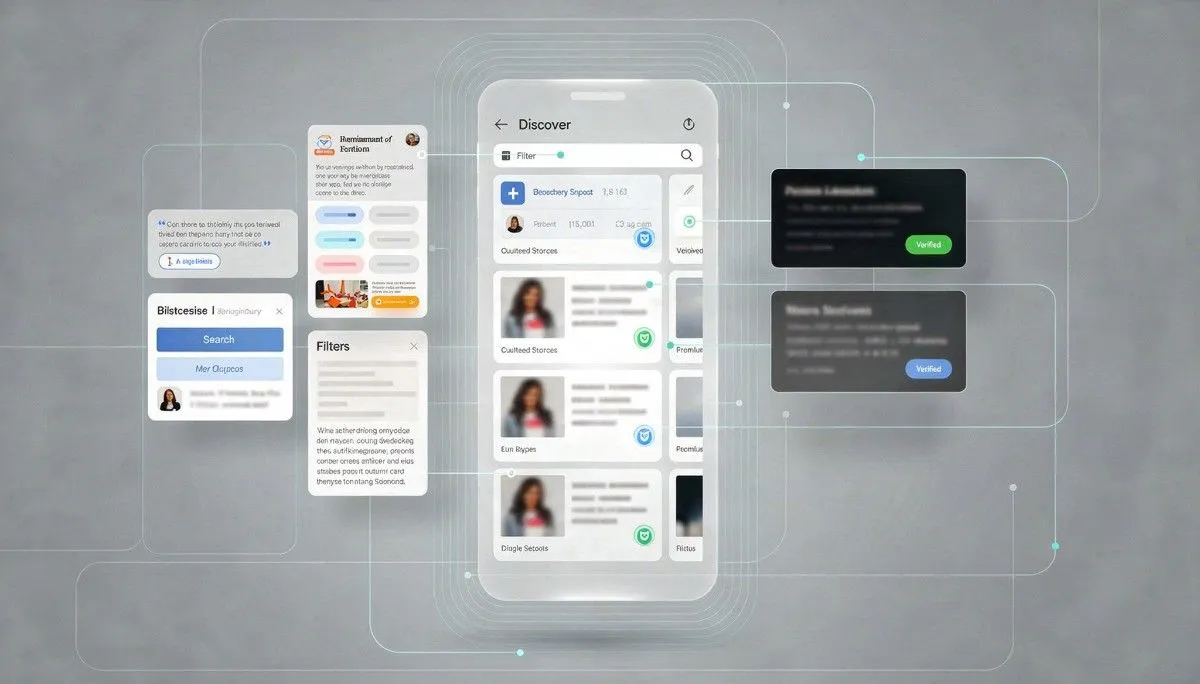
Google has released the February 2026 Discover core update, a broad change to the systems that decide what content appears in Google Discover. The rollout began on February 5 for English-language users in the United States and is expected to expand globally over the coming months.
At a glance, the update looks straightforward: Better Local relevance. Less clickbait. More original, expert-driven content.
But beneath that surface, this update reveals something deeper about how Google now evaluates trust, expertise, and relevance, especially in environments where users aren’t actively searching.
But if you read this update only as a Discover tweak, you’re missing the real signal.
This isn’t just about what shows up in a feed. It’s about how Google is tightening the definition of trust in non-query-based discovery.
And that matters far beyond Discover.
Google’s Official Position
In its announcement on the Search Central Blog, Google framed the update as a quality improvement to the Discover experience.
Today, we’ve released the February 2026 Discover core update. This is a broad update to our systems that surface articles in Discover. Our testing shows that people find the Discover experience more useful and worthwhile with this update.
John Mueller, Search Advocate, Google
Google outlined three core goals:
1) Showing users more locally relevant content from websites based in their country
2) Reducing sensational content and clickbait in Discover
3) Showing more in-depth, original, and timely content from websites with expertise in a given area
While these goals may sound familiar, their application inside Discover is significant because Discover operates very differently from Search.
Discover Is a Recommendation System, Not a Query Engine
Unlike traditional search results, Discover doesn’t respond to keywords. It responds to confidence.
Users don’t ask Discover for answers. Discover decides what deserves attention before a question is even formed.
That distinction matters.
In a recommendation-based system, Google isn’t ranking answers; it’s selecting sources. This means the bar for trust, relevance, and expertise is inherently higher.
That makes Discover one of Google’s most sensitive systems. If Google changes Discover, it’s usually because its internal understanding of quality, relevance, or authority has shifted.
This is why Google emphasized that Discover traffic changes don’t necessarily reflect problems with a site.
As with all core updates, this change may lead to fluctuations in Discover traffic. Some sites might see increases or decreases; many sites may see no change at all.
John Mueller, Search Advocate, Google
In other words, Discover volatility is expected, and not diagnostic on its own.
Topic-Level Expertise Is Now Explicit
One of the most important clarifications in Google’s announcement addresses how expertise is evaluated.
Since many sites demonstrate deep knowledge across a wide range of subjects, our systems are designed to identify expertise on a topic-by-topic basis.
John Mueller, Search Advocate, Google
Google isn’t saying you need to be a big authority site to appear in Discover.
It’s saying:
Expertise is evaluated topic by topic, not just domain by domain.
Google illustrated this with a simple example:
A local news site with a dedicated gardening section could have established expertise in gardening, even though it covers other topics. In contrast, a movie review site that wrote a single article about gardening would likely not.
John Mueller, Search Advocate, Google
This is a clear signal that one-off content written outside a site’s real strengths is becoming less effective, especially in Discover.
This reinforces a pattern we’ve been seeing across Search, SGE and now Discover:
Breadth without depth is quietly losing value.
Why Local Relevance Is Being Elevated
Google explicitly stated that Discover will now surface more content from websites based in a user’s country.
This doesn’t mean global publishers are excluded, but it does mean context matters more.
Local relevance helps Google increase perceived usefulness, credibility, and relatability. For users, content that reflects their geography often feels more trustworthy, even when covering broader topics.
For publishers targeting audiences outside their home market, this update may temporarily reduce Discover visibility, at least until the rollout expands globally.
Clickbait Isn’t Penalized, It’s Deprioritized
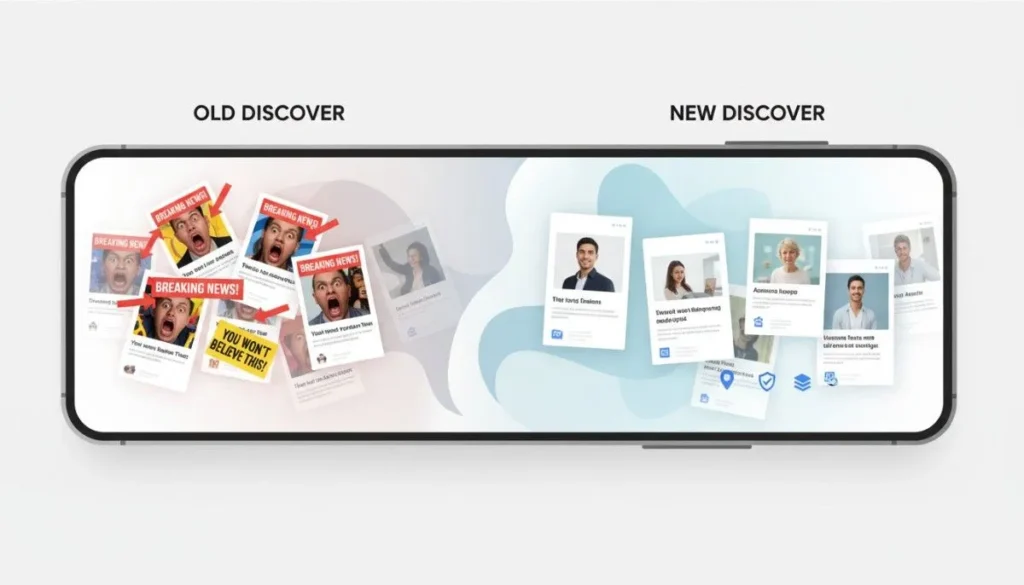
Google did not describe this update as a penalty system. Instead, it framed the change around selection quality.
Reducing sensational content doesn’t mean those pages disappear from the web. It means Discover is less likely to recommend them.
This aligns with a broader trend across Google’s systems: Engagement tactics alone are no longer enough to earn distribution in AI-driven or recommendation-based surfaces.
Personalization Still Applies
Google confirmed that Discover will continue to personalize content based on user preferences.
We’ll continue to show content that’s personalized based on people’s creator and source preferences
John Mueller, Search Advocate, Google
This means authority and expertise don’t operate in isolation. They’re filtered through user behavior, interests, and historical engagement.
Trust is contextual, not absolute.
What Site Owners Should (and Shouldn’t) Do
Google’s guidance remains consistent with previous core updates (December 2025 Core Update):
For site owners seeking guidance, our general guidance about core updates applies, as does our Get on Discover help page.”
There are no Discover-specific fixes, optimizations, or technical switches to flip.
What matters instead:
1) Publishing consistently within areas of real expertise.
2) Producing original, timely, and meaningful content
3)Avoiding exaggerated or misleading framing
4)Ensuring relevance to the audience being targeted
Discovering success is built over time, not engineered overnight.
What Google Is Really Optimizing For
Google says the update improves the Discover experience in three ways:
– More locally relevant content
– Less sensational and click-driven content
– More in-depth, original, timely content from sites with real expertise
– Taken individually, these aren’t new ideas.
Taken together, they point to something bigger:
Discover is becoming a trust-weighted surface, not an engagement-maximized one.
Google is actively moving away from:
– Shock headlines
– Broad, generic coverage
– One-off articles written outside a site’s true expertise
And toward:
– Location-aware relevance
– Topic-level authority
– Consistent editorial depth
Final Perspective
The February 2026 Discover core update isn’t a dramatic shift,but it is a precise one.
Google is refining how it decides which content deserves proactive visibility, especially when users aren’t searching at all.
And in an AI-shaped web, recommendation is quickly becoming more powerful than ranking.
And Discover is showing us what that future looks like,quietly, but clearly.
FAQs On Feb 2026 Discover core update
What is the February 2026 Google Discover core update?
The February 2026 Google Discover core update is a major change to how Google selects content for Discover feeds. The update focuses on showing more local content from websites in your country, reducing clickbait headlines, and prioritizing original content from sites with proven expertise in specific topics.
How long will the February 2026 Discover update take to roll out?
The update started rolling out on February 5, 2026 for English users in the United States. Google will expand it to other countries over the next few months. You may see traffic changes happen slowly over several weeks instead of all at once.
Does this update affect Google Search rankings?
No, this update only affects Google Discover, not regular Google Search results. Your website may lose or gain Discover traffic without any change to your search rankings. The two systems work differently even though they share some quality standards.
Why did my Discover traffic drop but search traffic stayed the same?
Discover and Search use different rules. Discover recommends content before people ask for it, so Google is more careful about quality and trust. Your content might answer search queries well but not meet Discover’s higher standards for expertise and originality.
Can international websites still appear in Google Discover?
Yes, but the update now favors websites from your own country. If you run a website in one country but target readers in another country, you may see less Discover traffic in that foreign market.
How does Google determine topic-level expertise?
Google looks at whether your website regularly publishes quality content about a specific topic. For example, a local news site with a gardening section can show gardening expertise. A movie review site that writes one gardening article will not be seen as a gardening expert.
Does covering multiple topics hurt Discover performance?
No, as long as you show real expertise in each topic. The problem happens when you write random articles outside your knowledge areas. Google prefers websites that build deep content in specific subjects rather than write about everything.
Is clickbait penalized by this update?
Clickbait is not penalized or removed. Google simply shows it less often in Discover feeds. Sensational headlines and exaggerated content are deprioritized, meaning Discover will recommend other content instead.
How can I recover lost Discover traffic?
To recover Discover traffic, publish high-quality content in your areas of expertise, create original insights instead of copying others, avoid misleading headlines, and make sure your content matches your audience’s needs. There is no quick technical fix.
Should I stop writing about topics outside my main expertise?
You can still write about other topics, but expect less Discover visibility for that content. Google wants to see consistent expertise, so one-time articles outside your specialty won’t get much Discover traffic. Focus on building content clusters in topics you know well.
Can AI-generated content rank in Discover after this update?
AI-generated content can still appear in Discover if it provides real value and shows expertise. However, generic AI content without original insights or human expertise will perform poorly. The quality and usefulness matter more than how you created it.
How do I track my Discover performance after this update?
Use Google Search Console and check the Discover performance report. Look at your traffic trends over several weeks instead of checking daily. Discover traffic naturally goes up and down, so weekly patterns give you better information.
Will this update affect other Google products in the future?
Google has not confirmed this, but the focus on topic expertise and trustworthy sources may influence other Google systems. The same principles could apply to AI Overviews and other recommendation features as Google develops them.