

For most brands, attention peaks the moment a customer clicks “Buy Now.” The ad converted, the page persuaded, the payment went through. The metrics look green. Time to move on to the next acquisition. But here is the problem: for the customer, the experience is only just beginning.
They have invested their money, and with that comes a mix of excitement and quiet anxiety. Will this product deliver? Will the experience be seamless? Will this brand show up when it matters?
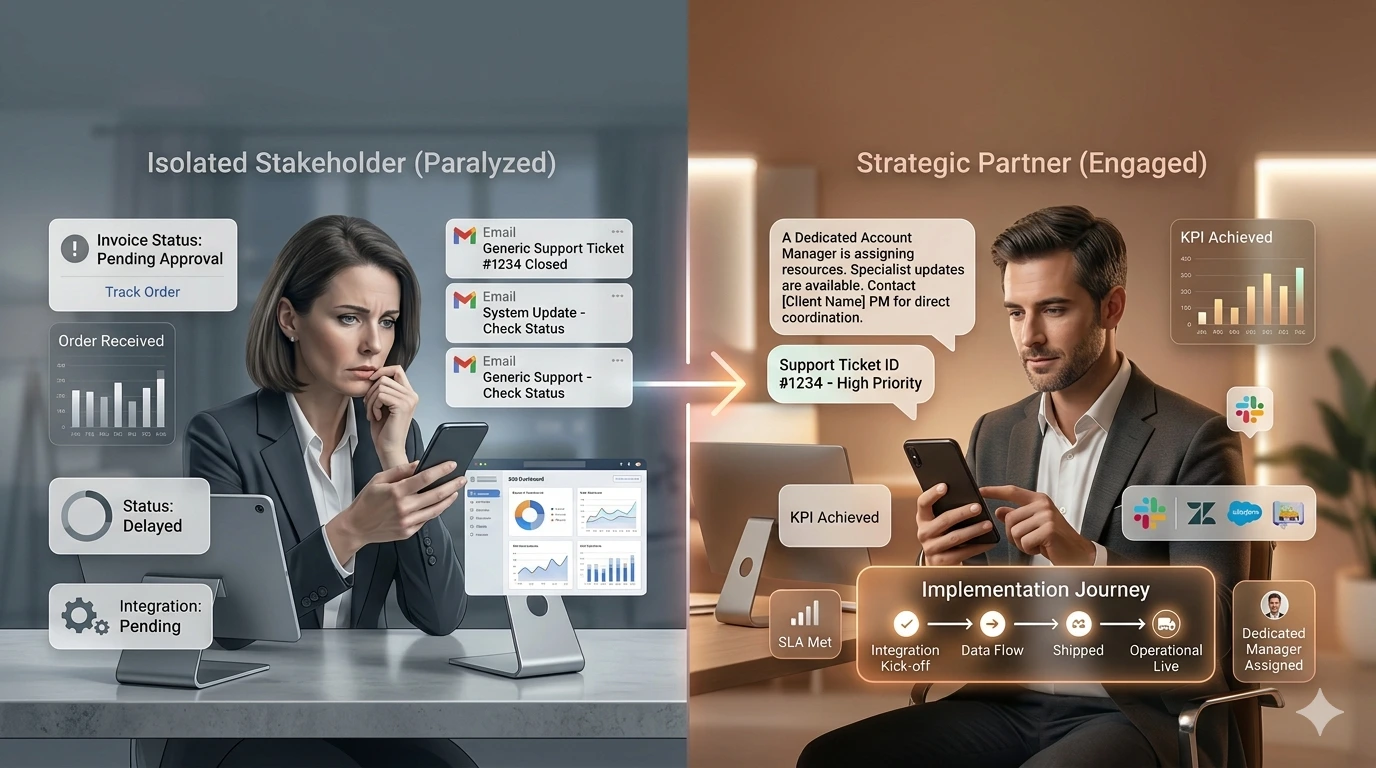
This is where the majority of brands quietly fail. No reassurance, no personality, just a confirmation email and a tracking link left to do all the work. What should be a powerful moment of connection becomes a waiting game.
And while the brand moves on, the customer starts to think. This is the heart of post-purchase paralysis, and overcoming it is one of the most underleveraged levers in D2C brand loyalty.
The Real Problem Isn’t Sales. It’s What Happens After.
For the customer, the story does not end at checkout. In many ways, it intensifies. They have already parted with their money, and now they are waiting. Not just for a package, but for reassurance. This is when doubt creeps in: Was it worth it? Will it arrive on time? Did they choose the right brand? Your silence at this moment communicates nothing good.
What most customers receive after placing an order:
A generic order confirmation. A tracking link with no context. No further communication from the brand.
That is not a brand experience. That is logistics, and nothing more.
The post-purchase phase is not downtime for the customer. It is the period when they are most alert, most evaluative, and most likely to form a lasting opinion about your brand. They are checking their inbox. They are refreshing the tracking page. If all they find is silence, their confidence quietly erodes. This gap between purchase and delivery is where customer retention is won or lost.
The Waiting Phase is Not Boring. It’s critical.
Shipping period is treated as a downtime by brands. It is not treated as downtime by customers. This is the time when they are most awake and are most likely to judge you. This is the time when they check their emails and check their orders repeatedly. And if they are only getting a simple message saying that the order has shipped, they are not going to be satisfied.
What they normally get is:
1) A simple order confirmation message
2) A tracking link with no context or explanation
3) No real communication from the brand
That’s not an experience. That’s just logistics working.
Why This Silence Costs More Than You Think
Customer acquisition is not for free anymore. You have to spend money to acquire attention, clicks, and sales. But what’s the use if they buy once and never come back? You are back to square one. Research indicates that even a marginal increase in customer retention can have a massive impact on future growth. However, most companies ignore the phase that impacts customer retention the most.
If you remain silent during the post-purchase phase, you create the following:
1) Uncertainty about the purchasing decision
2) Weak association with the brand
3) Lower probability of future purchase
You did not lose these customers at the ad level. You lost them after they had already decided to trust you. That is a far more avoidable and far more costly failure. Our conversion rate optimization services and lead nurturing workflows are built specifically to close this gap.
The Last Mile is Actually the First Mile
Here’s the shift most brands miss. Delivery is not the end of the journey. It’s the start of the next one. The way you show up between the order and the delivery determines whether the customer comes back or forgets you existed.
This is the phase where:
1)This is the phase where brand trust is built or quietly destroyed.
2) Where first impressions harden into lasting opinions.
3) Where the customer decides, without ever being asked, whether you are worth a second purchase.
Treating this phase as a gap in your strategy, rather than an opportunity, is one of the most common and costly mistakes in ecommerce brand building. The brands winning on customer lifetime value (CLV) understand this deeply.
This is not just experience. It’s a strategy.
The business case is straightforward. If customers do not come back, you keep spending to replace them. If they do come back, your customer acquisition cost drops and your margins improve. The post-purchase moment is not loud or flashy, but it is one of the highest-leverage points in your entire growth strategy.
Smart brands activate this phase through marketing automation that delivers the right message at the right time without requiring manual effort.
A well-designed workflow can include order confirmation with a personal tone, proactive shipping updates, a post-delivery check-in, and a review or repurchase prompt, all automatically triggered and all building brand loyalty without a single additional ad spend. Pair this with email marketing and WhatsApp automation for a complete, always-on post-purchase engine.
Key Takeaways
- Trust Is Built Post-Purchase: The post-purchase phase is where brand loyalty is genuinely formed, not at the point of sale. Use nurturing workflows to stay present throughout.
- Silence Creates Doubt: A lack of communication after purchase does not feel neutral to the customer. It feels like abandonment, and it directly undermines customer retention.
- One-Time Buyers Are a Symptom: A high proportion of one-time customers almost always points to a weak or nonexistent post-purchase experience strategy.
- The Waiting Period Is Critical: The time between order and delivery is when customer perception is most malleable. Fill it with relevant, reassuring communication.
- Delivery Starts the Next Cycle: Think of every successful delivery as the opening of the next purchase journey. Follow up with intention and build the habit of return. Our workflow automation tools make this effortless to scale.
- Communication Drives Retention: Proactive, thoughtfully timed communication after a purchase is one of the highest-ROI investments a brand can make in its long-term growth. Explore how conversion rate optimization and post-purchase strategy work together at Oddtusk.
Final Thought: Don’t Go Missing After the Sale
Most brands treat the purchase as the finish line. The money arrives, the system updates, and everyone moves on. But the real race begins in the moments after, when the customer is waiting, watching, and quietly forming their final verdict on whether this brand deserves their loyalty.
This is where confidence is built or doubt is seeded. Not through big campaigns or bold creative, but through small, consistent signals that tell the customer you are still paying attention. Because if you are not, they will notice. And once brand trust is lost in this phase, it is exceptionally difficult to recover.
Customers do not return simply because you have a good product. They return because the entire experience, from the moment they clicked “Buy Now” to the moment the package arrived and beyond, felt right. That finish line is not the checkout. It is everything that comes after it. If you are working hard to earn the sale but not working equally hard to keep the customer, you are delivering half a brand experience. In today’s market, half is not enough.
At Oddtusk, we help brands build the systems and strategies that turn one-time buyers into loyal customers. From post-purchase automation to consumer behavior analysis, our approach is built around the full customer journey, not just the moment of conversion. Explore our ecommerce marketing services to see how we help brands show up after the sale.