

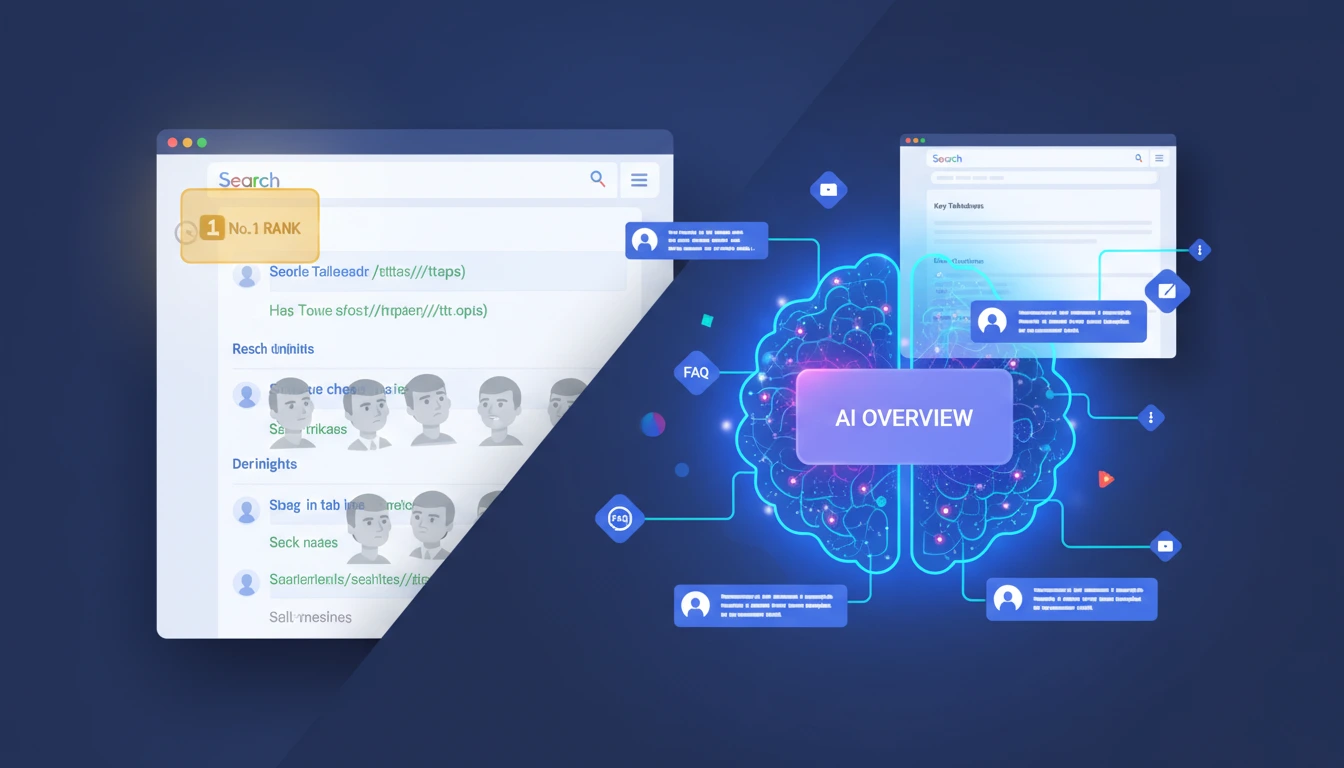
For almost 20 years, getting your web page to the front of one of the search engine results was the biggest ambition that digital marketers had. Besides the guaranteed visits from the web page users, there was also a direct correlation with increasing revenue and higher sales conversion rates. When you put all that into the context of the #1 spot in the rankings of Google, you are hitting marketing gold. Nowadays, we are in a situation where the traditional way of ranking and generating web traffic is losing its position. Welcome to the era of “zero-click search,” where it is the AI-powered platforms like Google’s AI Overviews, ChatGPT, and Perplexity that do the work of sifting through information and presenting it instantly to the user. The only way to keep your brand in the picture is to go for AI SEO optimization so that your automated summaries are not skipped over.
In today’s world, just having a great place in the rankings at the top of the organic search results page is not enough for a work-based business. You have all the reasons to be happy if your website is ranked first on a search engine results page, but there is an outside chance that the AI assistant might still completely ignore your site. This is because the nature of the search has changed. It is no longer a list of links but a full-fledged array of answers. Brands that want to thrive in the modern marketplace should shift their attention to answer engine SEO as their new source of customer acquisition. They can achieve this by producing content that is not only highly relevant but also understandable by their target customers as well as machines. The brands that fail to make the shift will continue to be practically invisible to the most powerful engines of this new era.
The Shift from Indexing to Interpretation
The main difference between the old-style search and the present environment is in the way information is taken in. Old SEO was mainly about being indexed; today, being seen is about being understood. Search engines in the past tried to spot keywords and backlinks to decide your rank on a list. Nowadays, AI models search for “meaning” and “context” to determine whether you are a reliable source of an answer.
This transition explains why AI SEO optimization is the leading-edge brands’ main concern. AI models don’t simply “scan” your words; they “understand” your intent. If your article is hidden beneath dull headings without a clear information hierarchy, the AI will just skip you and choose a competitor who has organized their information for extraction. In 2026, being seen will no longer be a position; it is a reference.
Professional SEO services now incorporate AI optimization as a fundamental strategy.
Why Answer Engine SEO is the New Standard
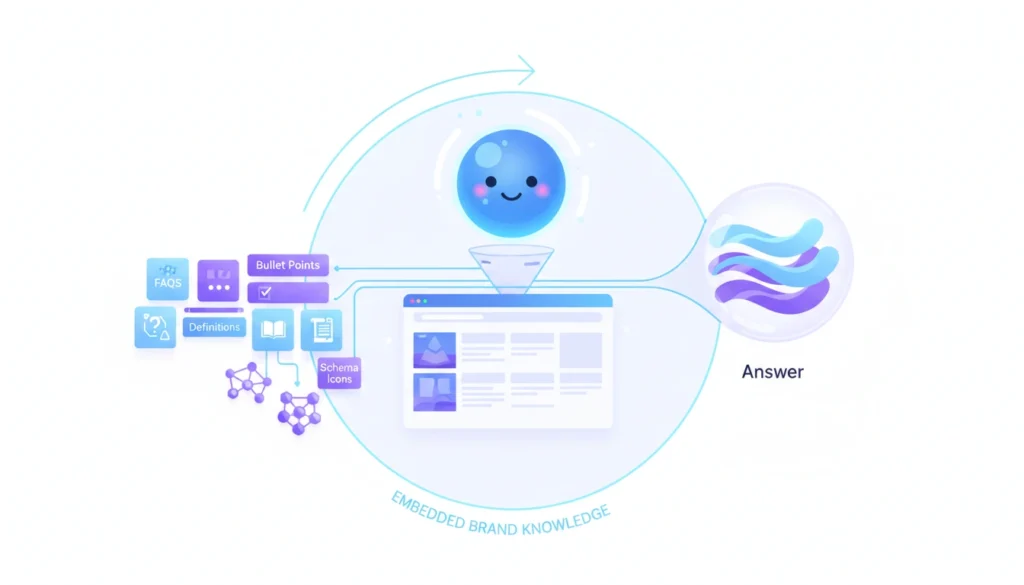
As more users switch to conversational interfaces, the “Answer Engine” has superseded the “Search Engine.” This has given rise to a new specialized discipline called answer engine SEO (AEO). Whereas traditional SEO is primarily about generating traffic to a URL, AEO is about embedding your brand’s knowledge into the AI-generated answer.
How Answer Engine SEO Works:
1) Snippet-Ready Formatting: The content should be segmented into “extractable chunks” that an AI can immediately lift and use, e.g., bullet points, numbered lists, and short definitions.
2) Direct Answer Logic: Your content should not “dance” around an issue but instead reveal the answer right away. AI engines prefer the “inverted pyramid” style, conclusion first, evidence later.
3) Semantic Depth: Answer engine SEO deals with topical authority. It is not sufficient to just use a keyword; you have to discuss the related subtopics and “intent clusters” that show you are a thorough subject matter expert.
The Danger of "Vanity Rankings"
Many companies continue to boast about their high rankings for general keywords, not realizing that such rankings are getting less traffic nowadays than three years ago. When an AI summary dominates a top search result, organic click-through rates (CTR) can decline by up to 60%. These are the “vanity rankings” we refer to. They may appear great in a monthly report, but they don’t give you leads or revenue.
Your AI SEO strategy should therefore focus more on high-intent queries to be effective. You want your brand to be the one that a user will refer to when they say, “Which one is the best service for X?” or “How do I fix Y?” It is more beneficial to be the authoritative reference quoted in a ChatGPT answer than to be #1 for a generic keyword that AI will just summarize without having to direct the user to your site.
Strategic conversion rate optimization ensures that when traffic does arrive, it converts effectively.
Technical Foundations for AI Visibility

If you want to make sure the “brain” of the internet doesn’t neglect you, you have to communicate in its language. This implies a much deeper level of technical hygiene than we have seen previously.
1) Advanced Schema Markup: The use of FAQ, HowTo, and Review schemas is no longer a matter of choice. It serves as a translator, converting your text into structured data that machines can interpret with 100% certainty.
2) Natural Language Processing (NLP) Alignment: The newest AI SEO optimization necessitates that we write in a way that is similar to how people talk and ask questions.
3) EEAT Signals: AI systems check your brand reputation by cross, referencing it with the web. If your leadership bios, citations, and reviews are not in harmony, AI will see a “trust gap” and will prefer a more verified entity. Professional content marketing services ensure your content meets E-E-A-T standards and technical requirements.
Key Takeaways for the AI Era
- Visibility Over Traffic: Getting a mention in an AI Overview is like getting the new “Position Zero.” The emphasis should be on becoming a source, not just on getting a link.
- Structure is Essential: Use proper headings, Q&A sections, and schema markup to make your content easily understandable for AI crawlers.
- Intent is King: Concentrate on optimizing for “Why” and “How” questions instead of broad, single-word keywords.
- E, E, A, T More Than Ever: AI systems check your credibility based on your whole web presence. Make sure your brand signals are trustworthy and consistent.
- AEO is the Plan: You can implement answer engine SEO by giving a direct and short answer to the question right at the beginning of your content.
- Freshness is a Signal: Keep your facts, statistics, and insights updated. AI engines give more weight to recent, verified information over stale “evergreen” content.
Conclusion: Bridging the Gap with Oddtusk
The most major change in the entire digital history is the transition from a link-based web to an answer-based web. This demands a change in marketing approaches from volume-based to value-based authority. If your present approach is still solely centered on traditional rankings, you are basically putting your brand’s future at the mercy of an algorithm that is changing very fast, and you can’t even keep up with it.
At Oddtusk, we are experts in making such a shift. We realize that AI SEO optimization is not about trying to “trick the system” but about bringing your brand in line with the new mode intelligence operates. Our professionals are answer engine SEO specialists who make sure your company is not merely one among other search results, but rather the answer offered by the AI. We let you have a digital presence that is easily understood by machines, consistent with user needs, and above all, trustworthy. In the era of the answer, Oddtusk is the one making sure that it is you who gets the ear.
Explore our complete suite of digital marketing services, eCommerce solutions, and marketing automation to optimize for AI-powered search. Contact us to ensure your brand becomes the answer AI recommends.