


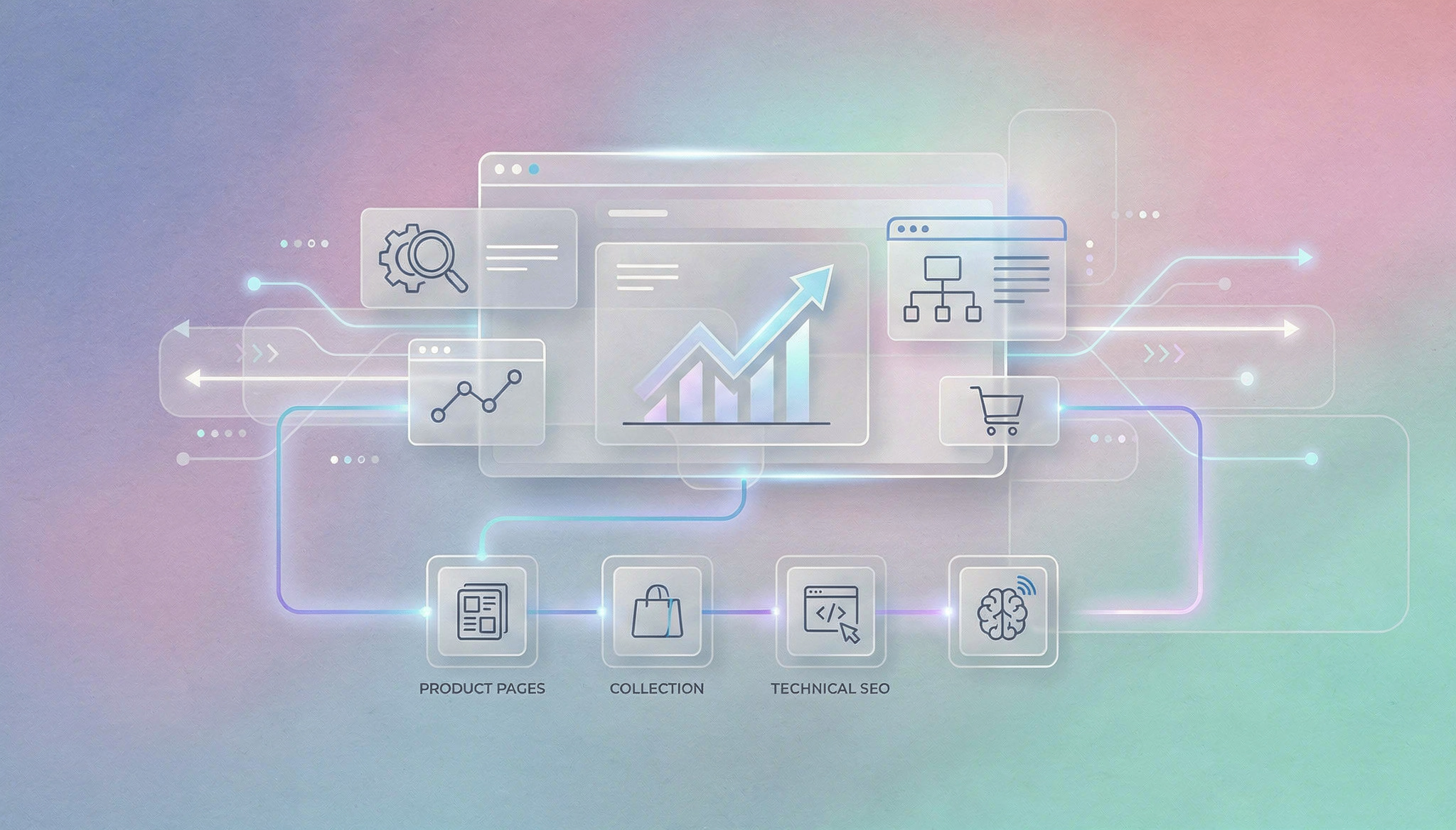
Search behavior is evolving rapidly. AI-powered results, zero-click searches, and intent-driven queries are the main ways through which users find brands. In such a setting, Shopify SEO is not just a matter of choice anymore; it is essential. A robust Shopify SEO checklist 2026 is instrumental in making stores visible, relevant, and competitive. It is through content structure and Shopify technical SEO that, in fact, every detail now turns into authority, trust, and steady organic growth. This guide details the factors that Shopify stores have to optimize in 2026 in order to be visible on the search results in the long run.
Why Shopify SEO Needs a New Approach in 2026
Shopify SEO in 2026 has evolved significantly from the days of quick hacks. Search engines are increasingly privileging detailed, clear, and topically relevant content rather than superficially optimized pages. Therefore, Shopify SEO strategies need to be in harmony with user intent, site crawling, and semantic coverage.
Those shops that maintain high rankings over time are not constantly trying to find new keywords. Instead, they are creating content networks that are well-organized and technically sound. A contemporary Shopify SEO checklist 2026 is a guarantee that your store will be comprehended not only by humans but also by search engines. Professional SEO services can help you implement these strategies effectively.
On-Page SEO Essentials for Shopify Stores
On-page SEO still acts as the foundation for Shopify visibility. But in 2026, the scope is much wider than just titles and descriptions. It is the content depth, internal clarity, and intent alignment that matter now.
- Optimized Page Titles & Meta Descriptions
Every Shopify page must have a well-defined title and description that serve the page’s purpose. Titles should indicate the main intent of the page, rather than just listing keywords. Meta descriptions should be aimed at attracting the user to click the link, rather than stuffing them with keywords. Proper on-page optimization acts as a foundation for wider Shopify SEO optimization goals. Our eCommerce SEO services focus on creating compelling, intent-driven page elements.
- SEO, Friendly URLs & Handles
Clear and simple URLs that anyone can understand are very helpful for search engine robots to explore the site and for users to feel comfortable with the site. Shopify handles ought to be brief, informative, and the same use of words should be maintained in both collections and products. This, in turn, is a direct way of supporting Shopify technical SEO and achieving indexing accuracy.
- Heading Structure & Content Hierarchy
Every page must have an understandable sequence of H1, H2, H3. Headings are like pointers to search engines of the content, being more detailed and related to the topic. The heading structure is a very significant element that any Shopify SEO checklist 2026 cannot overlook. Professional content marketing services ensure your content hierarchy is optimized for both users and search engines.
Product Page SEO That Drives Rankings and Conversions
Product pages directly contribute to revenues. Their SEO needs to be a delicate balance of being easily found and convincing the visitor.
- Search, Intent, Driven Product Descriptions
Insufficient descriptions have lost ranks. Shopify product pages must provide answers to buyer questions in a very clear way. Benefits, use cases, and specifications should be presented in a language that is understandable to humans first, while SEO is naturally incorporated. Our content strategy services help create compelling product descriptions that rank and convert.
- Image Optimization & Alt Text
Images are the main factors of both SEO and accessibility. Every product image should come with descriptive alt text that is in line with the product context. This makes Shopify SEO optimization better and also helps visual search to be more visible. Complement your SEO efforts with professional graphic design services for visually appealing, optimized product images.
- Internal Linking from Products
Products should have links to the relevant collections, guides, or related items. Internal linking enhances crawl depth and gives away topical authority to different parts of your Shopify store. Strategic internal linking is a core component of our eCommerce marketing services.
Collection Page Optimization for Topical Authority
Collection pages are frequently overlooked. However, in 2026, they are important SEO tools.
- Long, Form Collection Descriptions
It is not enough to just have short blurbs. Collection pages need to have structured, detailed content that describes product categories, explains use cases, and mentions variations. This is in line with the Shopify SEO checklist 2026 standards. Professional blog writing services can help create comprehensive collection page content.
- Smart Filtering Without Index Bloat
Filters are good for users, but might cause problems for crawlers. Proper canonical handling and noindex directives are definitely key components of Shopify technical SEO. Our Shopify SEO services include technical optimization to prevent index bloat.
Shopify Technical SEO Checklist for 2026
Technical SEO is the backbone of performance. Without it, even great content fails.
- Site Speed & Core Web Vitals
Speed directly impacts rankings and conversions. Optimizing images, reducing app bloat, and improving loading behavior are absolute necessities for Shopify technical SEO. Our Shopify design & development services prioritize performance optimization from the ground up.
- Mobile, First Optimization
The majority of Shopify traffic is from mobile. Therefore, themes need to be responsive, touch-friendly, and quick. Mobile usability has now become a baseline factor for ranking. Professional eCommerce web development ensures your store is mobile-optimized for maximum performance.
- Crawlability & Index Control
The implementation of robots.txt, canonical tags, and sitemap hygiene are the factors that search engines use to determine how they crawl your store. Clean crawl paths are essential if you want your Shopify SEO to be scalable. Our comprehensive SEO services include thorough technical audits and optimization.
Structured Data & Schema for Shopify
The Role of Schema in Shopify Store SEO Schema is a necessity rather than a choice now. It aids search engines in accurately understanding your store.
- Product Schema Implementation
Product schema is one of the most important factors in improving rich results visibility. Reviews, pricing signals, and availability, which are used to enhance CTR and trust, are the main elements that can be found in rich results.
- FAQ & Collection Schema
The FAQ schema is a great way to get AI Overviews and featured snippets. Collection schema, on the other hand, works by deepening the topical relevance of the content, both being fundamental aspects of a well
Content Strategy That Supports Shopify SEO
- Informational Content & Guides
Blogs, buying guides, and how-to articles are the main sources of long-tail discovery. They open up more internal linking and topical depth. Our content marketing services create comprehensive guides that drive organic traffic and establish topical authority.
- Content Clusters Around Products
Every product category must have the content that supports it. This method enhances Shopify SEO optimization while preventing keyword cannibalization.
Internal Linking & Navigation Optimization
- Logical Navigation Hierarchy:
Navigation menus must clearly represent business priorities as well as user intent. Simple, structured, flat navigation is helpful for both users and search engine crawlers.
- Contextual Internal Links:
Connect content pieces with products in a natural way. This not only helps user engagement but also allows the transfer of relevance signals between the pages. This is a key component of effective eCommerce marketing.
Tracking, Measurement & Continuous Optimization
SEO is an ongoing process. Shopify stores need to consistently track their performance.
- Search Console & Index Monitoring
Frequent inspections allow for the detection of crawl issues, coverage errors, and ranking drops. Keeping an eye on these helps to manage the technical side of SEO on Shopify promptly. Our marketing automation services include regular performance monitoring and reporting.
- Content Refresh & SEO Audits
Pages wear out over time. Giving new life to the content ensures that the positions in the search results remain stable and that the store stays relevant in the ever-changing SERPs.
Common Shopify SEO Mistakes to Avoid in 2026
- Thin product descriptions
- Overloaded apps are slowing performance
- Duplicate collection urls
- URLs Ignoring schema implementation
- Weak internal linking
- Not leveraging professional eCommerce SEO services
Key Takeaways
- Shopify SEO in 2026 is all about building a solid foundation rather than taking shortcuts
- Technical SEO and content have to be aligned to achieve maximum results
- Collection pages turn out to be huge
- SEO assets Schema helps to get noticed in AI-driven
- SERPs A well, a well-crafted Shopify SEO checklist 2026, is the key to sustainable growth
Conclusion: Building Shopify SEO That Scales
Shopify SEO in 2026 revolves around structure, intent, and consistency. Those brands that perceive SEO as a system rather than a mere tactic are the ones that grasp long-term visibility. Essentially, a robust Shopify SEO optimization strategy entails combining content depth with a clean technical foundation and semantic relevance.
At Oddtusk, we enable Shopify brands to put in place SEO frameworks that are compatible with their growth. We do not only deal with Shopify technical SEO; we also cover content architecture and internal linking. Our stance is always to achieve sustainable rankings rather than short-term wins.
Explore our complete suite of eCommerce services and digital marketing solutions or contact us to discuss how we can help optimize your Shopify store for 2026 and beyond.