
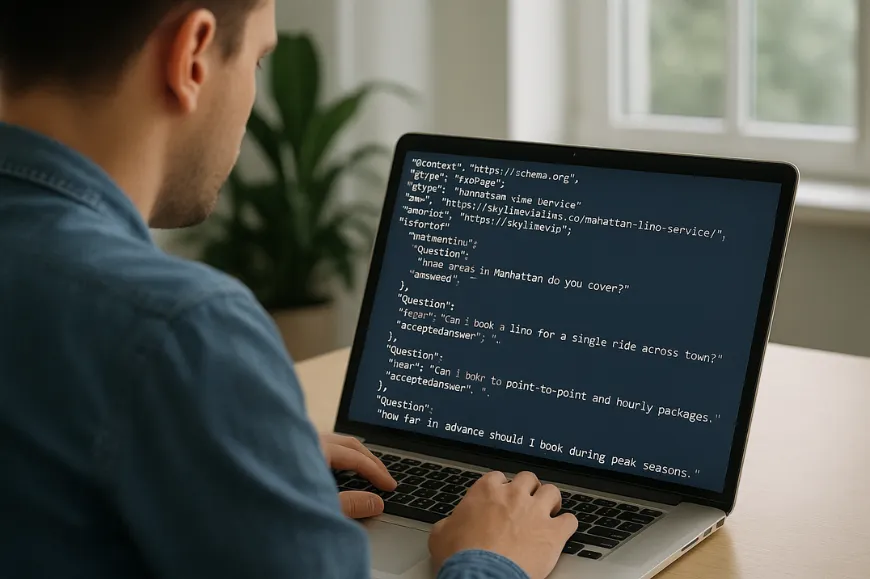
How schema markup and structured data drive rich snippets, higher CTR, and semantic authority in Google Search.
Image SEO Best Practices for 2025
Date: 05 - 01 - 2026
Time to read: 14 minutes
[ Table of Content ]
Every Pixel on Your Page Is a Ranking Signal
The internet is visual-first. Whether it is a product photo on an e-commerce listing, a recipe header, or a blog illustration, if an image does not appear in Google Search or Google Image results, it is invisible to the audience that matters most.
In 2025, image SEO is no longer optional. Google Lens processes over 12 billion visual searches per month. Google Images accounts for more than 22 percent of all internet searches. AI Overviews increasingly pull semantically relevant images into generative answer panels. Your images need to do more than look good. They need to be discoverable, indexable, and contextually aligned with the content they support.
This guide covers the foundational practices, the 2025-specific upgrades, and the strategic moves that make your images rank, convert, and strengthen your site's semantic authority across Google Search, Image Search, and AI-powered results. Our SEO services treat image optimisation as core infrastructure, not an afterthought.
What Is Image SEO?
Image SEO is the practice of optimising visual content so that search engines can crawl, index, understand, and surface your images in Google Image Search, featured snippets, product carousels, AI Overviews, and Google Lens results.
Google does not see images the way humans do. It reads contextual signals: the filename, the alt attribute, surrounding text, structured data, and page-level semantic relevance. Your job is to provide Google with precise, machine-readable signals that connect each image to the entities, intent, and meaning of the page it appears on.
In 2025, effective image SEO requires five layers working together: contextual relevance where the image matches page intent, semantic alt text that describes meaning rather than just stuffing keywords, ImageObject structured data integrated with Product or Article schema, visual uniqueness since Google deprioritises duplicate stock photography, and performance optimisation for fast loading across all devices.
Suggested article:Schema SEO Power Moves: How Structured Data Drives Clicks and Rankings
Why Image SEO Matters More Than Ever in 2025
The search experience is shifting toward visual discovery at a pace that makes image optimisation a competitive necessity, not a nice-to-have.
The data makes the case clearly. Nearly 60 percent of digital shoppers expect to see at least three to four product images before making a purchase decision. Google Lens now processes over 12 billion visual searches monthly, making image recognition a core part of user behaviour. According to industry research, 75 percent of online shoppers rely on product photos when deciding whether to buy. And Google Images alone represents 22.6 percent of all internet searches and 62.6 percent of Google Web Search activity.
If your images are not optimised, you are conceding an entire visual front of search to competitors who are. A high-quality image that loads fast, carries semantic relevance, and is backed by structured data does not just improve page aesthetics. It improves search rankings, visibility in visual discovery features, time-on-page metrics, and conversion rates.
The Image SEO Fundamentals That Still Work
The basics of image optimisation have not changed, but the precision required to execute them well has increased significantly. Here are the practices that remain essential for visibility across Google Search, Google Images, and AI Overviews.
1. Use descriptive, keyword-relevant filenames. Replace generic names like IMG_001.jpg with descriptive alternatives such as red-leather-jacket-men-winter.jpg. The filename is one of the first signals Google reads to understand an image's content. It adds contextual relevance to the page and increases visibility in both image and general search results.
2. Write semantic alt text, not keyword lists. Alt text serves two purposes: accessibility for screen reader users and semantic signals for search engines. A poor alt attribute reads "image" or "jacket." An effective one reads "Men's red leather biker jacket with silver zippers." Write alt text naturally, as if describing the image to someone who cannot see it. Keep it under 125 characters and avoid stuffing multiple keywords into a single attribute.
3. Compress images without sacrificing quality. Slow-loading images damage both user experience and search rankings. Use compression tools like TinyPNG, Squoosh, or ShortPixel to reduce file sizes. Serve images in WebP or AVIF format for faster delivery. Keep individual file sizes under 150 KB wherever possible. Research from Google confirms that 53 percent of users abandon a page that takes more than three seconds to load, and an uncompressed hero image is frequently the cause.
4. Implement ImageObject structured data. For product pages, recipes, and editorial content, embed ImageObject schema within your existing Product, Recipe, or Article structured data. Include the contentUrl, caption, license, and representativeOfPage properties. This markup increases eligibility for product carousels, recipe cards, and AI-generated overview panels in Google Search.
5. Submit an image sitemap. If your site contains a significant volume of images, submit a dedicated XML image sitemap through Google Search Console. This ensures Google indexes more of your visual content, gives you control over what gets crawled, and is particularly valuable for e-commerce catalogues and image galleries.
6. Ensure mobile responsiveness. Use the srcset attribute and the HTML picture element to serve appropriately sized images across device types. Avoid embedding text inside images that gets cropped on smaller screens. Verify rendering with Google's Mobile-Friendly Test tool. Visual-first browsing is the default user behaviour on mobile, and unresponsive images are a direct ranking liability.
Suggested article:Entity-Based SEO: How AI Understands Your Content Context
2025-Ready Upgrades to Your Image SEO Strategy
With AI-first search engines like Google's SGE and Multisearch, the way images are processed, understood, and surfaced has fundamentally changed. The 2025 upgrades go beyond metadata and into semantic integration.
Semantic image placement matters. Images should not only be optimised individually but positioned near topically aligned text on the page. Google's AI has improved its ability to read the context surrounding an image, including anchor text in adjacent links, captions, heading proximity, and even paragraph relevance. An image placed next to semantically related content carries stronger ranking signals than the same image placed in a generic sidebar or footer.
Multimodal search optimisation is now critical. AI models no longer evaluate text, images, and video independently. They assess consistency across media formats as an indicator of reliability and trust. A product image that aligns with the page description, supported by a relevant video and authentic user reviews, carries substantially more weight in search rankings than the image alone. Cross-format consistency is a trust signal that directly impacts visibility in AI Overviews and rich results.
Schema markup tailored to image type delivers richer results. Whether you are publishing recipes, showcasing products, or featuring editorial photography, structured data matched to the specific image context helps Google index and represent your visuals more richly across Search, Image Packs, and Google Discover.
Core Web Vitals and Image Performance
Slow-loading images do not just frustrate users. They directly suppress rankings. Google's Core Web Vitals, and specifically Largest Contentful Paint (LCP), now play a measurable role in determining search positions. Image performance is not just a UX consideration. It is a ranking factor.
Optimise for LCP first. Your largest above-the-fold image, typically a hero banner or featured product shot, is usually the LCP element. Compress it aggressively, serve it in WebP or AVIF, preload it with a link rel="preload" tag, and host it on a reliable, fast server.
Use a Content Delivery Network. A CDN delivers images from servers geographically close to the user, reducing latency and improving load times globally. For sites with international audiences or high image volumes, this is non-negotiable infrastructure.
Serve next-generation formats. WebP and AVIF reduce file sizes by 25 to 50 percent compared to JPEG and PNG without visible quality degradation. Use the picture element with srcset to serve modern formats to supported browsers while maintaining JPEG fallbacks for older ones.
Size images for mobile first. The majority of your traffic is likely accessing your site on mobile devices. Use responsive image markup, compress for smaller viewport widths, and test load performance on throttled mobile connections. In a mobile-first indexing world, desktop-optimised images that are merely resized for mobile are not sufficient.
Tools That Make Image SEO Easier
Manually optimising every image across a site is not scalable. The right tools automate the repetitive work without sacrificing precision.
Screaming Frog crawls your entire site and flags missing alt text, oversized images, broken image URLs, and images without proper filenames. It is the fastest way to audit image SEO issues at scale.
ShortPixel and TinyPNG are compression tools that reduce file sizes while maintaining visual quality. Both are effective for improving LCP scores and preventing bloated page load times across large image inventories.
Cloudinary is a CDN-based media delivery platform that automatically serves images in next-generation formats, adapts to the user's screen size, and ensures fast delivery without manual intervention per image.
Google Search Console (Image Tab) shows which images appear in search, provides click-through rate data, and surfaces content gaps where images are underperforming or missing from results entirely.
SEO plugins like Rank Math and Yoast automate alt tag generation, image sitemap creation, and ImageObject schema insertion, reducing the manual overhead of image optimisation on WordPress and other CMS platforms.
Common Image SEO Mistakes to Avoid
Even well-intentioned image optimisation fails when foundational mistakes go undetected. These are the errors that consistently undermine image visibility in search.
Generic filenames. Search engines cannot interpret IMG_9087_finaleditV2.jpg. Every image filename should describe the visual content using relevant, hyphen-separated terms. A file named red-floral-summer-dress.jpg gives Google an immediate contextual signal before it even reads the alt text.
Missing or keyword-stuffed alt text. An alt attribute crammed with "best red dress Bhubaneswar buy red dress online red dress SEO" does more harm than good. Write a single, natural description per image. Alt text should serve users first and search engines second.
Skipping image sitemaps. Without a dedicated image sitemap or image entries in your existing XML sitemap, Google may never discover large portions of your visual content. This is particularly damaging for e-commerce sites, portfolio pages, and image-heavy editorial content.
Reusing the same image across multiple pages. Google's AI prioritises visual uniqueness. Repeatedly serving the same product shot or stock image across different pages diminishes freshness signals and reduces the relevance score for each instance.
Omitting structured data for image licensing. On editorial and news content, missing licensing metadata means your images will not qualify for rich results or Google Discover inclusion. ImageObject schema with the license property is the fix.
Preparing for Visual Search and Generative AI
Google has moved beyond indexing text alone. It now observes, categorises, and derives meaning from images. The trajectory is clear: your visuals will increasingly influence how AI models perceive and cite your content.
AI Overviews and SGE pull semantically embedded visuals. Generative search results favour images that are contextually connected to the surrounding content, not decorative placeholders. Images that carry alt text, structured data, and topical proximity to relevant text are the ones AI models select for citation.
Image clustering and entity tagging are operational. Google can now group related visuals and assign them entity-level meaning within the Knowledge Graph. Original, clear, context-rich images are far more likely to be clustered accurately than generic stock photography.
Originality is a ranking signal. AI models can detect generic stock content. Branded visuals, original product photography, behind-the-scenes footage, and custom illustrations now carry more weight than licensed stock images in both organic rankings and AI-generated results.
Plan visuals as content, not decoration. Every blog post, landing page, and e-commerce listing should include images that are strategically planned with schema markup, descriptive alt text, and captions that explain the purpose behind each visual. Images planned as core content assets compound in value over time as they accumulate search impressions and entity associations.
Make Every Image Work for Your Rankings
In 2025, images are not decorative elements. They are ranking infrastructure. They help search engines understand your content, engage users before and after the click, and determine whether your pages qualify for rich results, AI Overviews, and visual discovery features across Google Search.
From descriptive filenames and semantic alt text to ImageObject structured data, next-generation formats, and multimodal search alignment, every optimisation decision you make on your images compounds into stronger visibility and higher conversion rates. The brands winning in visual search are the ones treating every image as a semantic asset backed by structured data and contextual precision.
At Oddtusk, we build image SEO strategies that go beyond compression and alt tags. Our SEO services and content marketing solutions integrate visual optimisation with entity-first architecture, schema deployment, and Core Web Vitals performance to ensure every pixel on your site serves your rankings. Ready to turn your visuals into discoverable, converting content? Let's build your image SEO strategy together.
