
Paid media stops the moment you stop spending. SEO compounds. Every page that ranks, every entity that gets cited in an AI answer, every category where oddtusk builds topical authority, that visibility stays and grows. SEO is not a standalone tactic in our digital marketing approach. It is the channel that makes every other channel more efficient over time.
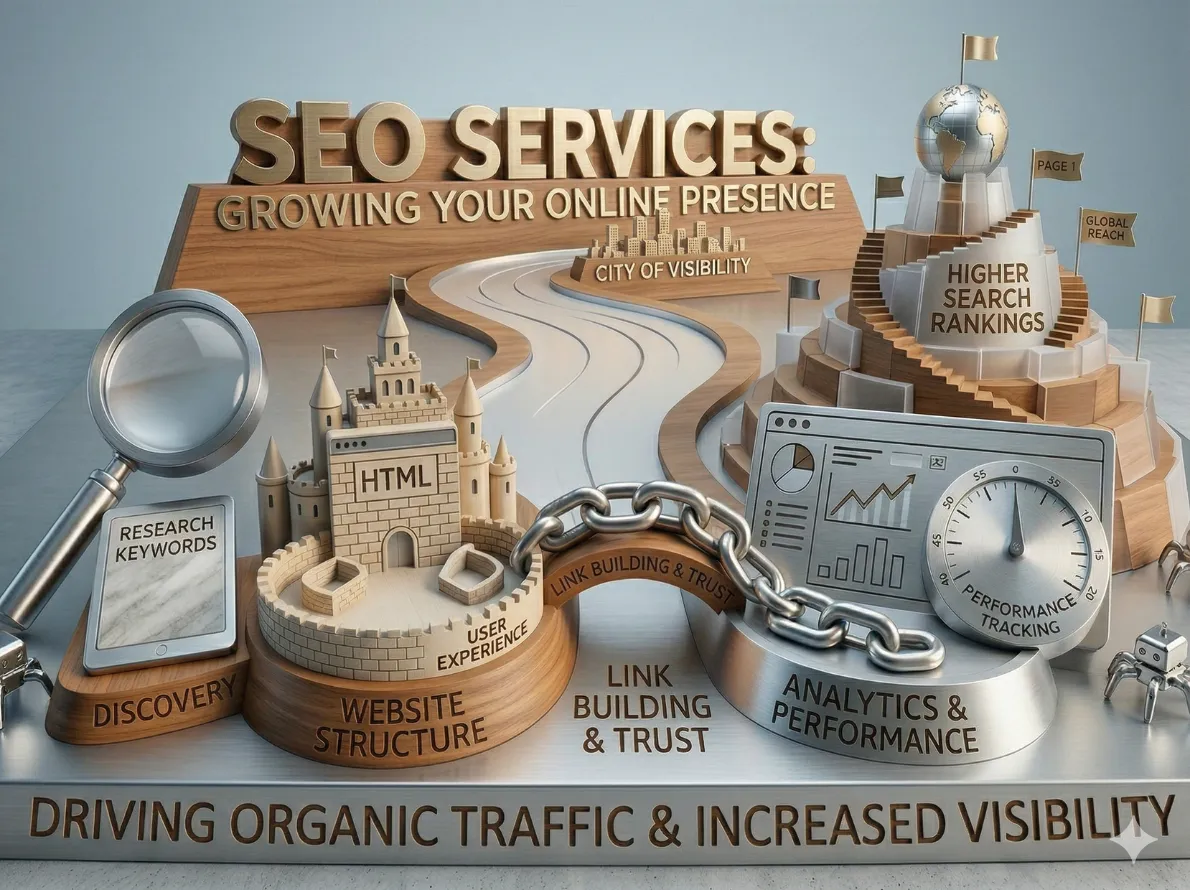
- Semantic SEO and entity optimisation
- Topical authority mapping
- AEO and GEO for AI answer engines
- Technical SEO audit and fixes
- Schema markup and structured data
- E-E-A-T optimisation
- Ecommerce SEO
- Local SEO and Google Business Profile
- B2B and SaaS SEO
- SEO and paid media integration
SEO lowers paid CPC over time, smart brands run both together. Others keep paying full price.
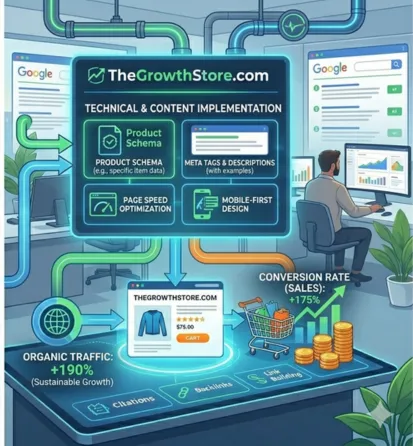
SEO and paid media are not competing budgets. They are complementary channels that serve different moments in the buyer journey and make each other more efficient when run from the same strategy. Paid media captures demand now. SEO builds the organic presence that makes your paid ads more credible and your cost per acquisition lower over time. A user who sees your brand in organic search results and then encounters your paid ad converts at a higher rate than a cold paid click. oddtusk plans SEO and paid media together so both channels build toward the same revenue goals.
Semantic SEO and topical authority
Search engines in 2026 rank sites that demonstrate comprehensive expertise on a topic, not sites that have stuffed individual keywords into individual pages. Semantic SEO builds topical authority by covering an entire subject area with interconnected, entity-rich content. oddtusk starts every SEO engagement with a topical authority map that identifies every page needed to own a category — then builds from that structure rather than publishing reactively. See our full semantic SEO service for the complete approach.
AEO and GEO for AI answers
A growing share of information queries in India are now answered directly by AI systems — Google AI Overview, ChatGPT, Perplexity, Gemini — without a click to any website. Answer Engine Optimisation and Generative Engine Optimisation structure your content to be cited as a source in these AI-generated answers. Brands not optimised for AI citation are losing brand impressions that previously came from organic search clicks. oddtusk's AEO and GEO service builds this visibility across all five major AI answer platforms.
Technical SEO
The best content strategy fails if the technical foundation is broken. Crawl errors, slow page speed, canonical mismatches, missing schema markup, and poor Core Web Vitals suppress rankings regardless of content quality. oddtusk's technical SEO audit identifies every technical issue suppressing organic performance and prioritises fixes by revenue impact rather than SEO convention. Technical health is maintained continuously, not fixed once and forgotten.
Ecommerce and local SEO
Ecommerce SEO and local SEO are specialisations that require platform-specific knowledge. Ecommerce SEO at oddtusk covers category page topical authority, product page NLP, Shopify canonical resolution, and product schema — integrated with Shopping ads strategy so both channels target the same product priorities. Local SEO covers Google Business Profile optimisation, citation building, and geo-targeted content for businesses serving specific cities or regions in India.
Every ranking page reduces your cost per acquisition. Every AI citation increases brand impressions without additional spend. That is the compounding case for SEO.

oddtusk has built its own 277-page topical authority map for the digital marketing and SEO category in India. We practice the same semantic SEO methodology we build for clients, which means our content strategy insights come from real implementation experience rather than theoretical frameworks.
Google AI Overview, ChatGPT, Perplexity, Gemini, and Microsoft Copilot. AEO and GEO at oddtusk covers citation optimisation and entity visibility across all five major AI answer platforms, not just Google. Brand presence in AI answers is increasingly important as more Indian users switch to conversational AI for research queries.
For most Indian brands with existing websites and some domain history, the first significant organic ranking improvements from a well-executed semantic SEO strategy appear within 3 to 6 months. Lower-competition keywords and technical fixes show results faster. Competitive commercial categories take 6 to 12 months. oddtusk tracks leading indicators from month one via GA4 reporting.
Audit, map, build, publish, measure and compound
SEO audit — technical and content
Topical authority map
Technical fixes and content execution
Measurement, integration, and compounding
Everything you need to know about SEO as a digital marketing channel.
SEO and paid media serve different but complementary roles. Paid media delivers immediate traffic at a cost per click that stops the moment you stop spending. SEO builds organic search visibility that compounds over time without ongoing cost per click. The two channels reinforce each other: a well-ranked organic page reduces the cost per acquisition of paid campaigns by providing credibility, and paid campaign data informs which keywords to prioritise in SEO. oddtusk plans both channels together so they work toward the same revenue goals.
Semantic SEO builds content and site architecture around topics, entities, and user intent rather than individual keywords. Search engines in 2026 understand the meaning and context of content rather than matching keyword strings. Semantic SEO involves comprehensive topical coverage across a subject area so the site is recognised as an authoritative source. oddtusk uses this approach because it produces durable rankings resilient to algorithm updates and compounds in value as topical authority deepens. Full detail at our semantic SEO page.
Topical authority mapping is the process of planning the complete set of pages a website needs to cover a topic thoroughly enough to be recognised as an authoritative source. Without a topical map, most websites publish content reactively and never achieve category authority. It is the strategic foundation of effective SEO in 2026. oddtusk's topical authority mapping service delivers a complete page map, content briefs, internal link mesh, and sequenced content calendar.
AEO is Answer Engine Optimisation — structuring content to be cited by AI answer engines including Google AI Overview, ChatGPT, Perplexity, and Gemini. GEO is Generative Engine Optimisation — optimising for visibility in AI-generated responses across all generative platforms. A growing share of information queries in India is now answered directly by AI without a website click. Brands not optimised for AI citation lose brand impressions that previously came from organic search. See our AEO and GEO service for the full approach.
SEO results in India typically become visible in three to six months for lower-competition keywords and six to twelve months for competitive commercial categories. The timeline depends on existing domain authority, content strategy quality, technical health, and competitive landscape. oddtusk sets realistic expectations at the start of every engagement and tracks leading indicators like crawl coverage, indexation rate, and ranking trajectory alongside lagging indicators like traffic and conversions from month one, all measured through GA4.
SEO and paid media work best together. Paid media delivers immediate traffic while SEO builds. Once organic rankings are established, they reduce paid cost per acquisition because users who see both an organic result and a paid ad from the same brand convert at higher rates than cold paid traffic alone. Over time, compounding organic traffic reduces total marketing cost as a percentage of revenue. oddtusk tracks this synergy through blended MER alongside individual channel metrics.
oddtusk offers ecommerce SEO covering category page topical authority, product page NLP optimisation, collection page content, technical fixes for ecommerce platforms including Shopify canonical resolution, product schema markup, and internal linking strategy for category hierarchies. Ecommerce SEO is integrated with paid media so organic rankings and Shopping ads target the same product priorities, reducing total customer acquisition cost across both channels. See our ecommerce SEO service for full detail.
The full oddtusk SEO services hub lives at /services/seo/. It covers semantic SEO, topical authority mapping, AEO and GEO optimisation, technical SEO audit, schema markup, E-E-A-T optimisation, ecommerce SEO, local SEO, B2B SEO, SaaS SEO, and platform-specific SEO for Shopify, WordPress, WooCommerce, and Magento. This page gives you the integrated digital marketing context. The full service detail lives there.