Shopify Development Company India
Shopify development is the custom design and build of online stores on Shopify's ecommerce platform. Oddtusk builds Shopify 2.0 stores with custom themes, app integrations, and conversion-optimized architecture.
Most Indian Shopify agencies build legacy-architecture stores that are difficult to maintain, cannot update without a developer, and were not designed for the way Shopify 2.0 works. Oddtusk builds on Shopify 2.0 OS2 with custom Liquid sections, metafields, and Sections Everywhere. Stores that clients can manage, that rank from launch, and that convert on Indian mobile connections. Every build feeds into our performance marketing and D2C growth services.
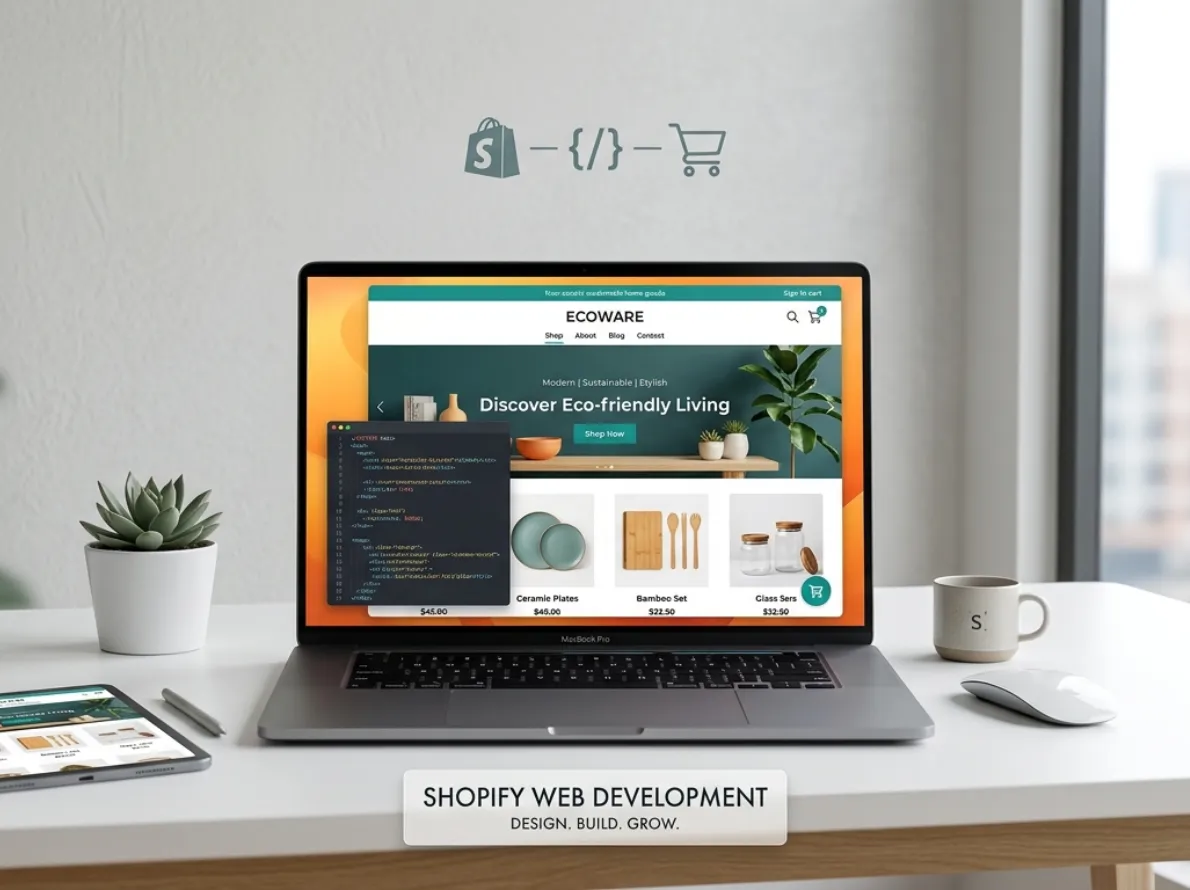
- Custom Shopify theme development
- Shopify 2.0 OS2 architecture
- Custom Liquid section development
- Shopify Sections Everywhere
- Metafields and metaobjects
- Conversion-first mobile design
- Shopify Flow automation
- App integrations (Klaviyo, Yotpo, Loox)
- GA4 and GTM tracking at launch
- Store migration with Shopify SEO
Legacy stores need developers for every update. Shopify 2.0 does not.

Shopify 2.0 introduced Sections Everywhere, allowing full customization of every page via the theme editor without code. By using JSON templates and metafields, we eliminate heavy app dependencies for product data. Oddtusk builds exclusively on OS2 to ensure your store stays compatible with Shopify's future ecosystem. Our builds like Zivanyaa and Maavni leverage this architecture for easy maintenance and sustained post-launch growth through our specialized Shopify SEO, D2C growth agency, and performance marketing services. The full development context sits within our ecommerce web development offering.
Custom Liquid sections and Shopify 2.0
We build visual components as custom Liquid sections with modular settings. Store owners update heroes, testimonials, and trust elements via the theme editor without touching code. Sections Everywhere extends this creative control beyond the homepage to every page type, directly supporting Shopify SEO by enabling collection body content fields, schema markup, and internal linking on every template.
Metafields, metaobjects, and structured data
Metafields store structured data like material info, care instructions, and FAQs, ensuring consistency across your storefront and schema markup. We use metaobjects for complex repeating content like size charts or ingredient panels. Defining these schemas during the technical build integrates structured entity data into your store's core, improving both ecommerce SEO and rich result eligibility.
Conversion-first design and Shopify CRO
Many Indian stores fail by ignoring local buyer behaviors like COD preference and price sensitivity. Oddtusk designs specifically for these trust signals, testing performance against local mobile speeds. CTA placement and social proof get finalized before development starts. Clean Core Web Vitals are a prerequisite, not an afterthought, directly supporting organic rankings.
App integrations and Shopify Flow
We set up essential D2C stacks including Klaviyo for email and SMS retention marketing, Razorpay for payments, and Shiprocket for logistics. Using Shopify Flow, we automate customer tagging, low-inventory alerts, and review triggers. Every integration gets tested against live flows, with Meta and Google tracking fully verified before handover so performance marketing campaigns connect through Meta Pixel and Google Ads conversion tracking via GTM.
Shopify 2.0 OS2. Metafields. SEO architecture. GA4 at launch.

Legacy themes lock store owners into developer dependency. OS2 with Sections Everywhere and JSON templates gives your team full control without touching code.
From discovery and design through Liquid development, app integrations, GA4 setup, and pre-launch QA. Fully documented and handed over ready to scale.
LCP, INP, and CLS get addressed in the Liquid theme code before go-live. Clean Core Web Vitals at launch protect organic rankings from day one.
Discovery, design, build, integrate, launch QA
Discovery and SEO architecture
Mobile-first design
Section development and metafields
Launch and QA
Shopify development in India: key questions
A purchased Shopify theme is a pre-built template designed to work for many types of stores. Customization is limited to what the theme developer exposed in settings. A custom Shopify theme gets built specifically for your brand: every section, layout, and interaction gets designed from your brand requirements and conversion goals. For Indian D2C brands with distinctive visual identity or category-specific product display requirements, a custom theme built on Shopify 2.0 OS2 is the correct choice. A custom build also lets us adopt relevant AI-powered UI/UX design trends as shopper expectations change, which fixed theme settings rarely allow. The build connects directly to our Shopify SEO service for post-launch ecommerce SEO growth.
Shopify 2.0, also called Online Store 2.0 or OS2, introduced Sections Everywhere, JSON templates, and metafield integration. Sections Everywhere allows custom Liquid sections on any page template. JSON templates make every page type fully configurable through the theme editor. Metafield integration allows product attribute data stored in metafields to render by theme sections without app dependencies. Oddtusk builds exclusively on Shopify 2.0 OS2, producing stores that are easier to maintain and that have clean technical SEO foundations baked in from day one.
Shopify metafields are custom data fields attached to products and collections that store structured information beyond Shopify's default fields. Metaobjects are reusable structured data templates for repeating content types. Oddtusk uses metafields to store product attributes, care instructions, size guides, and FAQ entries in a format referenced by both storefront sections and product schema markup. Product information gets stored once and renders consistently across the storefront and in Google's structured entity data, improving both buyer experience and rich result eligibility.
Shopify Flow is Shopify's built-in automation platform that creates workflows triggered by store events without code. For Indian D2C brands, Oddtusk implements Shopify Flow automations for: tagging customers by purchase value for Klaviyo segmentation, triggering review request flows after delivery confirmation, sending low-inventory alerts to the fulfilment team, applying loyalty tags for discount eligibility, and pausing ad campaigns when key products go out of stock. Flow automations ensure the right customer data flows to your retention marketing and paid media tools automatically.
The most common integrations on Indian D2C Shopify builds are: Klaviyo for email and SMS marketing flows; Yotpo or Loox for product reviews with schema markup for rich results; Shiprocket or Delhivery for Indian shipping; Razorpay or PayU as payment gateway alternatives. And Shopify Flow for automation. All integrations get configured before launch and tested against live purchase flows. Post-launch email automation gets handled through our retention marketing service.
Store migration is a high-risk operation for organic search because it changes URLs and site architecture. Oddtusk starts every migration with a technical SEO audit of the existing store to identify all ranking URLs and their organic traffic. A complete redirect map gets produced before any migration work begins. GA4 and GTM tracking gets verified on Shopify before cutover. The redirect map gets checked post-launch and Google Search Console gets monitored through re-indexation to confirm ranking recovery.
Shopify development and Shopify SEO get planned together because the build decisions: URL structure, canonical configuration, collection page content fields, product schema, internal link architecture, determine the SEO foundation. A store built without collection body content fields, without breadcrumb schema, and with incorrect canonical configuration requires significant retroactive SEO work. Oddtusk builds these elements into every Shopify store from the start. For post-launch growth see our Shopify SEO service.
A Shopify store built correctly is the foundation for paid media performance. Meta Pixel and Google Ads conversion tracking configured through GTM ensures paid campaigns optimize toward actual purchase events from day one. Product schema and breadcrumb schema improve click-through rate from Google Shopping and organic search. Klaviyo integration at build time means email automation starts capturing data from the first visitor. For brands wanting to scale after launch, our D2C growth agency service and performance marketing service build on the same infrastructure. To check that the new store is converting traffic into profit, start with a revenue audit for Shopify stores.