Most Indian D2C brands have Shopify and HubSpot sitting side by side without being connected. Most Indian B2B brands have a CRM with incomplete data, duplicated contacts, and outdated records: and have built email sequences on top of that broken database. CRM integration at Oddtusk starts with data hygiene before automation, and specific field mapping decisions that generic setup guides do not cover. Every CRM integration connects to our retention marketing and ABM services.
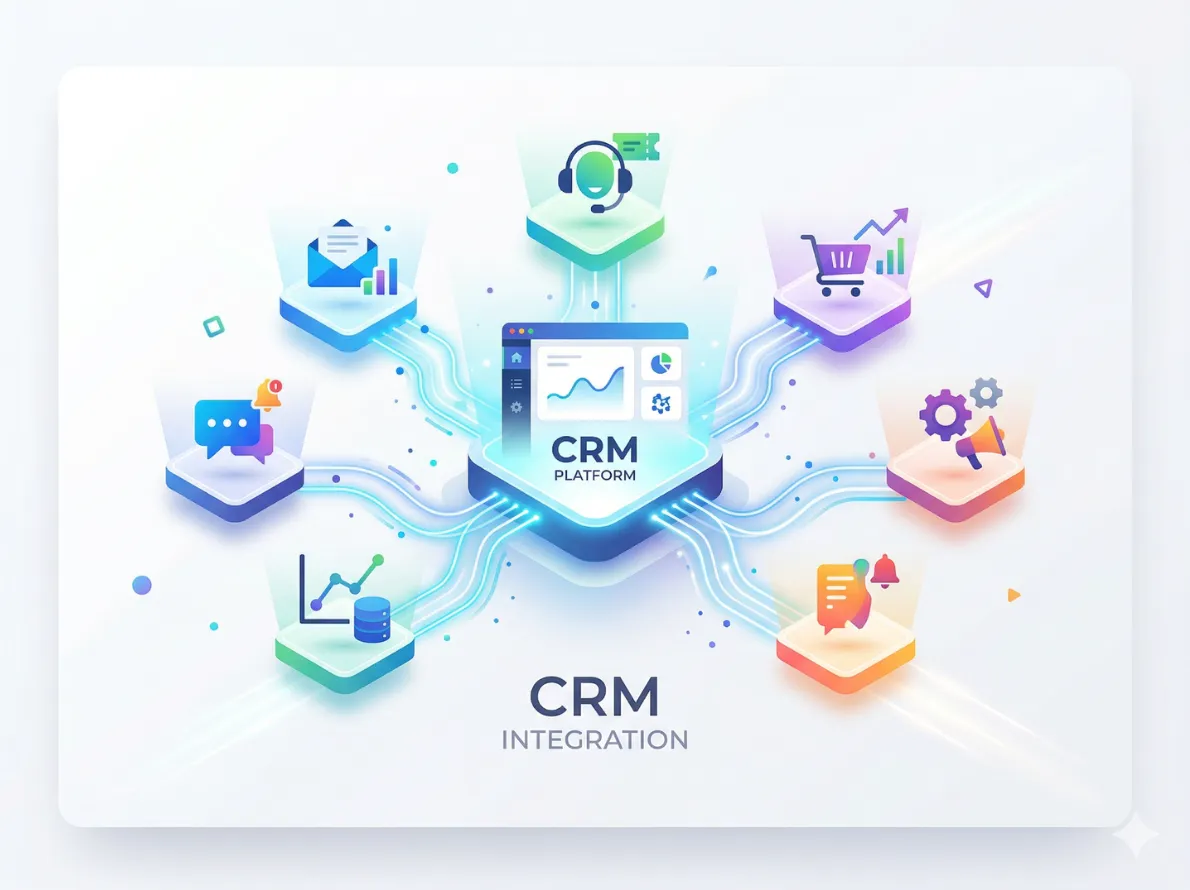
- CRM audit and platform selection
- HubSpot setup and configuration
- Salesforce custom objects and setup
- Zoho CRM for Indian SMBs
- Shopify and HubSpot sync (field mapping)
- WooCommerce and CRM integration
- Lead scoring configuration
- Deal stage automation
- Contact deduplication and data hygiene
- CRM to email platform connection
- Google Ads and Meta audience sync
- Pipeline reporting dashboards
Dirty CRM data causes duplicates and poor scoring. Clean data ensures reliable automation.
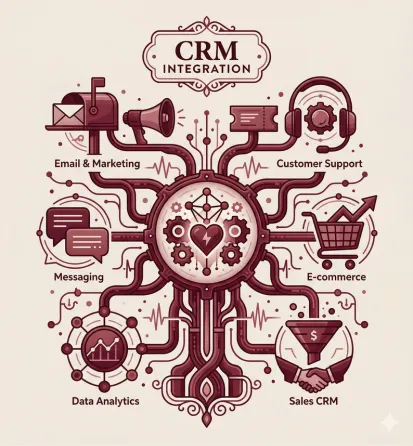
Indian CRM databases often suffer from duplicate leads, manual entry typos, and unmanaged bounces that damage domain deliverability and compliance. Running automation on dirty data skews results and irritates customers. Oddtusk solves this with a comprehensive data audit, deduplicating records and correcting field mapping before any configuration. Our specialised Shopify-to-HubSpot sync handles Indian market nuances like COD order mapping and Razorpay events. By ensuring your CRM accurately reflects the sales pipeline, we provide a clean data foundation essential for effective lead nurturing and high-ROI account-based marketing strategies, all trackable through GA4 pipeline reporting.
HubSpot integration and Shopify sync
We configure HubSpot with custom properties and triggers, avoiding generic setups. Our Shopify-HubSpot sync features India-specific field mapping: separating COD from prepaid orders, tracking Razorpay events, and syncing SKU data for behavioural segmentation. By mapping lifecycle stages and abandoned checkouts as precise workflow triggers, we enable high-ROI WhatsApp and email automation built on accurate, localised ecommerce data.
Salesforce and Zoho CRM for Indian brands
Indian enterprises requiring custom objects, regional territory management, and SAP or Oracle integrations can configure Salesforce. For SMBs, Zoho CRM provides full lead management and pipeline reporting at a fraction of the cost. Zoho's local advantages including INR billing, India-specific support, and native integration with Zoho Books make it the most cost-effective choice for regional B2B sales and operations teams.
Lead scoring, deal stage automation, and data hygiene
Lead scoring uses Indian B2B signals: pricing visits, webinars, and ICP match, to prioritise high-intent prospects, while filtering out competitors and academic domains. We automate deal stage notifications and follow-up tasks to ensure seamless pipeline transitions. Crucially, we perform data hygiene: deduplication and bounce removal, before setup, ensuring your automation drives accurate, high-ROI outcomes.
CRM to marketing channel connections
We sync your CRM with Klaviyo, HubSpot, and WhatsApp platforms like WATI to automate lifecycle-based sequences and lead responses. CRM data also populates Google and Meta custom audiences for precise retargeting and lookalike modelling. Using n8n, we connect these channels to provide unified pipeline dashboards showing deal velocity and revenue by source.
Data hygiene before automation. Shopify and HubSpot synced with India-specific field mapping. HubSpot for B2B, Zoho for SMBs, Salesforce for enterprise. CRM connected to every channel that uses its data.

HubSpot is appropriate for Indian B2B brands needing marketing automation and pipeline reporting at up to 100 sales users. Zoho CRM is appropriate for Indian SMBs needing full CRM functionality at Indian pricing: significantly lower per-user cost than equivalent HubSpot or Salesforce tiers. Salesforce is appropriate for enterprise and high-complexity B2B with custom deal structures.
The Shopify and HubSpot sync is the single most common CRM integration request from Indian D2C brands. Most have both tools with no connection between them. The integration requires India-specific field mapping: COD order status, Razorpay payment events, and abandoned checkout triggers being the three most important decisions.
Oddtusk does not configure automation on a CRM database before completing a data hygiene pass. Duplicate records, bounced emails, and missing lifecycle stages produce wrong automation outcomes at scale. The hygiene pass is completed and validated before the first workflow is built.
CRM audit, platform sync, lead scoring and data hygiene, marketing channel connections
CRM audit and platform selection
Ecommerce platform sync: Shopify and WooCommerce
Data hygiene, lead scoring, and deal stage automation
Marketing channel connections and pipeline reporting
Everything you need to know about CRM integration for Indian brands.
CRM integration connects the customer relationship management system to the other tools in the marketing and sales stack: email platforms, ecommerce stores, advertising platforms, analytics tools, and WhatsApp automation, so data flows automatically without manual export or import. Without integration, marketing and sales teams operate on separate data sets. Integration resolves these data silos and makes the entire revenue operation run from a single accurate source of truth.
HubSpot is recommended for Indian B2B brands needing strong marketing automation and pipeline reporting with a sales team of up to 100 users. Salesforce is recommended for Indian enterprises with custom deal structures, territory management, or deep enterprise system integration. Zoho CRM is recommended for Indian SMBs needing full-featured CRM at Indian pricing: significantly lower per-user cost, with INR billing and a product suite familiar to teams already using Zoho Books or Zoho One.
The Shopify and HubSpot sync maps order events to HubSpot contact properties and workflow triggers. Key India-specific decisions: COD order status tracked separately from prepaid orders, Razorpay and Indian payment gateway events mapped correctly, customer lifecycle stage assignment from purchase frequency and recency, product SKU data flowing to contact properties for segmentation, and abandoned checkout events firing as workflow triggers. These specific field mapping decisions determine what segmentation and automation can be built subsequently.
Lead scoring assigns a numerical score to each contact based on ICP fit and behavioural signals, allowing the sales team to prioritise leads most likely to close. Positive signals for Indian B2B include pricing page visit, webinar attendance, content download, and email open frequency. Negative signals include competitor domain email, student institution indicators, and geography outside the target market. When a lead's score crosses a threshold, the CRM triggers a sales rep notification and moves the contact to the SQL stage in the pipeline.
CRM data hygiene resolves the data quality problems that accumulate over time: duplicate contacts from multiple form submissions, missing required fields, outdated company information, incorrect lifecycle stage assignments, and bounced email addresses still marked active. Data hygiene matters before automation because automation runs on CRM data: duplicate records send the same person two emails, and a lead scoring model built on contacts with missing company name fields cannot accurately score company size. Oddtusk runs data hygiene before any automation is configured.
CRM contact lists sync to Google Ads customer match and Meta custom audiences: enabling paid retargeting to known leads and customers, and lookalike targeting from closed customer lists. These audiences are significantly more accurate than pixel-based audiences because they are built from first-party CRM data rather than cookie-based tracking that is increasingly unreliable on iOS devices. See our performance marketing service for how n8n keeps these audiences synced automatically.
CRM integration is the data foundation that makes both lead nurturing and ABM functional. Lead nurturing sequences require the CRM to track which stage a prospect is at and trigger the right message automatically: without CRM integration, sequences run on the email platform's own data, which lacks the sales context that determines sequence relevance. ABM requires account-level engagement tracking to measure pipeline attribution to ABM activities. See our retention marketing service and ABM service.
A standard CRM integration engagement runs two to four weeks for a brand with an existing CRM that needs sync configuration, data hygiene, and marketing channel connections. A full CRM setup from scratch: platform selection, configuration, Shopify or WooCommerce sync, lead scoring, deal stage automation, data hygiene, and channel connections, runs four to six weeks. Enterprise Salesforce implementations with custom objects run six to twelve weeks. The data hygiene phase takes as long as it takes: rushing it produces automation that fails silently on bad data.