
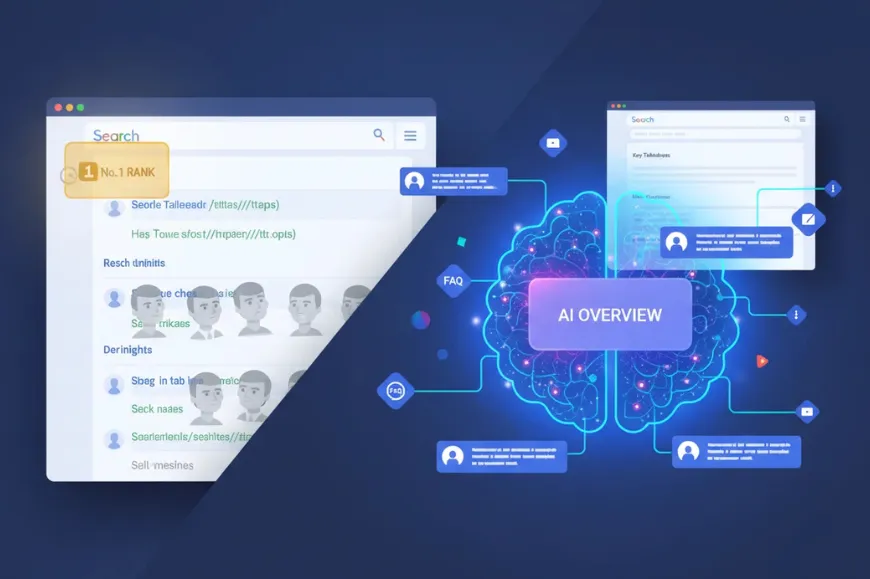
A top ranking does not guarantee AI visibility. This guide explains why AI still ignores most brands.
What AI Visibility Means in 2026: A Complete Guide
AI visibility is how often and how accurately a brand appears in AI-generated answers from chat-based search engines, virtual assistants and result panels. AI visibility depends more on context, trust and authority than on keywords.
Date: 04 - 17 - 2026
Time to read: 6 minutes
[ Table of Content ]
Why Traditional Visibility Is No Longer Enough?
AI visibility in 2026 is the extent to which your brand's voice or identity appears within AI-generated responses. AI visibility depends on whether machines understand your brand, and a page one ranking does not settle that. AI is changing the browser experience, and your brand is either seen and suggested in it or left out.
Users now get answers in place of a list of links. This guide covers what AI visibility means, how AI search visibility works today, and why brand visibility in AI now matters for growth.
What Is AI Visibility in 2026?
AI visibility is the extent to which your brand's voice or identity appears within AI-generated responses. These responses are generated from chat-based search engines, virtual assistants, and result generation panels. Users may never visit a website yet still engage with a business through an AI-generated summary.
AI search visibility depends more on context than on keywords, unlike conventional search engine optimisation. Before referencing a brand, AI systems analyse meaning, trust, relevance, and authority. A company not clearly defined within AI-accessible context parameters will not appear.
AI visibility is what separates ranking from being referred to. Our AEO and GEO optimization services are designed to optimise for both traditional search and AI-driven discovery.
As Google pushes toward AI-assisted buying, checkout and business agents are becoming a larger part of the search experience, which makes AI visibility essential. AI Mode is changing how brands get surfaced in 2026, and Google's AI-powered search revolution shows what that means for your visibility.
Suggested article:Ranking Isn't Enough: Why AI Overlooks Your SEO
How AI Search Visibility Has Changed User Behaviour
AI search visibility matters because search in 2026 is conversational: users ask questions and expect direct answers. AI combines information into a single answer, which cuts clicks and raises the zero-click rate. AI search visibility decides whether your brand is included in those synthesised responses.
Without trust and recognition from AI systems, your content gets skipped. That leads to:
- Fewer opportunities to win clicks through traditional blue-link results
- Greater reliance on brand authority and topical credibility
- Increased weight given to contextual relevance over keyword density
Brands that understand AI visibility optimise for answers as well as rankings. Our content marketing services help create content that AI systems understand and recommend.
Why Brand Visibility in AI Is Now a Growth Metric
Brand visibility in AI is now a revenue signal. When AI systems suggest tools, services, or products, users treat those suggestions as expert advice. If your brand is consistently mentioned in AI answers:
- Trust spreads rapidly across new audiences
- Brand recall improves without paid impressions
- Decision-making accelerates at the consideration stage
- Sales funnels compress as users arrive pre-qualified
Low brand visibility in AI has the opposite effect. You may still rank while users never find you, and that reduces demand and authority over time. Planned digital marketing helps your brand keep strong AI visibility.
How AI Systems Decide Which Brands to Show
AI systems evaluate several factors when determining AI visibility, and keywords or backlinks are only part of the picture.
- Depth of topical expertise, consistent, authoritative coverage of a subject area
- Consistency of brand mentions across the broader web
- Clear alignment with user intent at multiple stages of the buying journey
- Structured and accessible content that AI systems can parse and extract
- Strong experience and authority indicators including E-E-A-T signals
AI models look for patterns, so brands that keep explaining topics and solving problems build AI search visibility over time.
Suggested article:Cracking the AI Code: How LLMs Interpret Content & Structure for AI Search Success
The Role of Entities in AI Visibility
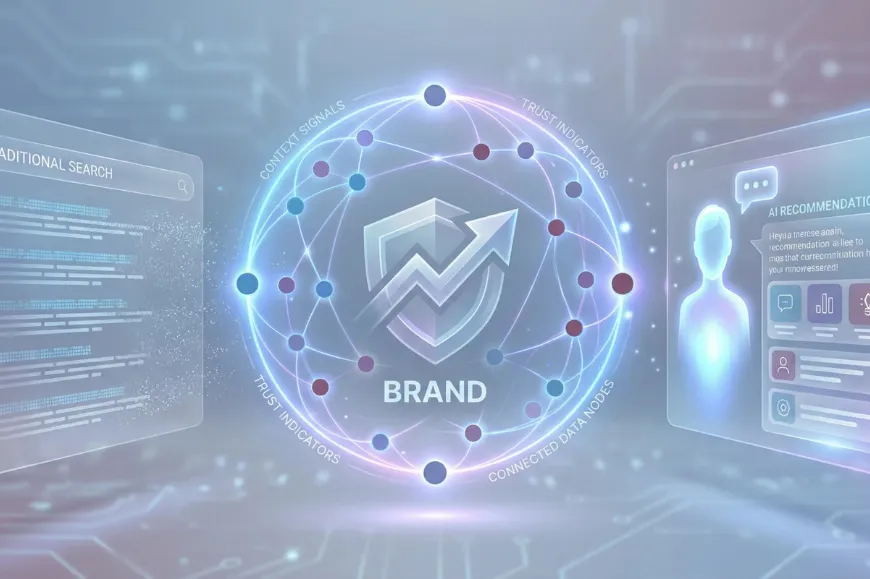
Entities provide the foundation for AI understanding. An entity is a specific, well-identified concept, a brand, service, person, or topic. AI systems relate entities to one another to construct intended meaning. To improve its AI visibility, a brand must:
- State clearly what it is known for, with no ambiguity in brand positioning
- Use consistent names and descriptions across all digital touchpoints
- Provide thorough topical discussion that maps to its core entity cluster
- Avoid vague brand impressions that create misinterpretations in AI systems
When AI systems form a clear picture of your brand as an entity, AI visibility improves. This is the practical outcome of combining entity SEO with a well-structured topical authority map.
Content Strategy for AI Search Visibility
Content is still the biggest driver of AI visibility, though the strategy has changed. AI systems prefer content that explains why something happens as well as what it is. Content that works for AI:
- Responds to actual user inquiries across informational, navigational, and transactional intent
- Uses clear, direct language that reduces ambiguity for AI extraction
- Adheres to a logical framework with hierarchical headings and structured flow
- Gradually increases topical depth from broad to specific within a content cluster
- Demonstrates personal experience and real-world expertise (E-E-A-T)
Long-form, authoritative content performs better because it offers a richer context. AI models can confidently reference your brand when that context is present. Our blog writing services create AI-optimised content that builds lasting authority. A strong content strategy ensures every piece maps to a specific intent cluster within your topical map.
Suggested article:Authority Is the New SEO: How Reddit and Quora Power AI Visibility
Structured Data and AI Visibility
Structured data helps AI systems recognise your content more quickly. Although AI models are capable of interpreting natural language, structuring reduces ambiguity and improves extraction efficiency. Using clear headings, schema markup, and logical layout:
- Diminishes vagueness in how content is interpreted by AI systems
- Raises content extraction efficiency for AI-generated answer panels
- Increases AI search visibility across conversational and voice-based queries
Structured content also helps make sure brand descriptions are accurate when AI systems summarise your pages. A technical SEO audit identifies any structural issues preventing AI from reading your content correctly.
Common Mistakes That Hurt AI Visibility
Many brands are unknowingly reducing their AI visibility by relying on tactics that are now outdated. Issues that commonly damage AI search visibility include:
- Over-optimising keyword content at the expense of contextual depth and entity clarity
- Thin, repetitive articles that provide no differentiated value to AI systems
- Inconsistent brand messaging across platforms, creating entity confusion
- Lack of topical depth, surface-level content that AI systems quickly deprioritise
- Ignoring E-E-A-T signals, experience, expertise, authoritativeness, and trustworthiness
AI systems penalise confusion, and clear, consistent brands do better. Building E-E-A-T optimization into your content programme is now a baseline requirement.
The Long-Term Impact of AI Visibility
AI visibility builds over time. Brands that start earlier gain more, because each accurate reference leads to more visibility. Over time, high AI search visibility results in:
- Reduced customer acquisition costs as AI-referred users arrive pre-qualified
- Greater perceived authority in your category and adjacent topics
- Higher conversion efficiency across all funnel stages
- Enhanced brand equity as machine recognition reinforces human trust
AI visibility is a long-term strategy that keeps building. Planned account-based marketing can extend your AI visibility across high-value target accounts.
Suggested article:Predictive SEO: How to Anticipate Algorithm Changes Before They Happen
Key Takeaways
- AI Visibility defines how your brand appears in AI-generated responses
- AI Search Visibility depends on context, trust, and authority more than keywords
- Brand Visibility in AI is now a measurable revenue and growth signal
- Entities, content depth, and structured data matter more than keyword density
- Brands that adapt early build an advantage that grows over time
How Oddtusk Helps Brands Build AI Visibility
At Oddtusk, we help brands adapt to this new visibility layer. Our strategies focus on semantic clarity, entity positioning, and AI-first content frameworks. The goal is recognition by AI systems along with rankings.
Oddtusk aligns content, structure, and authority signals so businesses build AI visibility that lasts. The approach combines semantic SEO, AEO and GEO optimization, eCommerce services, and full-stack digital marketing solutions so your brand shows up in AI-powered search.
[ Common questions ]
Questions about this topic
AI visibility refers to the extent to which a brand's voice or identity appears within AI-generated responses from chat-based search engines, virtual assistants, and result generation panels. Unlike conventional SEO, AI visibility is context-driven. AI systems analyse meaning, trust, relevance, and authority before referencing a brand.
Traditional SEO focuses on ranking for keywords in blue-link results. AI search visibility is about being referenced and recommended within AI-generated answers. It depends on topical depth, entity clarity, brand consistency, and structured content, along with keywords and backlinks.
When AI systems consistently recommend your brand in answers, it shortens decision-making cycles, builds trust rapidly, and accelerates sales funnels. With low brand visibility in AI, you may still rank while AI systems bypass you in synthesised answers, diminishing demand and authority over time.
Entities are the foundation of AI understanding. AI systems relate specific, well-identified concepts, brands, services, topics, to construct meaning. A brand must clearly state what it is known for, use consistent names and descriptions, provide thorough topical coverage, and avoid vague brand impressions to enhance AI visibility.
Oddtusk builds AI visibility through semantic clarity, entity positioning, and AI-first content frameworks. Their strategies align content, structure, and authority signals to optimise AI search visibility, helping brands build recognition within AI-driven search as well as in traditional rankings.
