
A step-by-step local SEO guide for businesses in Bhubaneswar to improve Google Maps visibility and attract more local customers.
Jobs of Tomorrow: How AI and Digital Skills Will Shape Careers in Odisha
Date: 10 - 05 - 2026
Time to read: 8 minutes

Subscribe to our newsletter
[ Related Posts ]
Read article
Read article
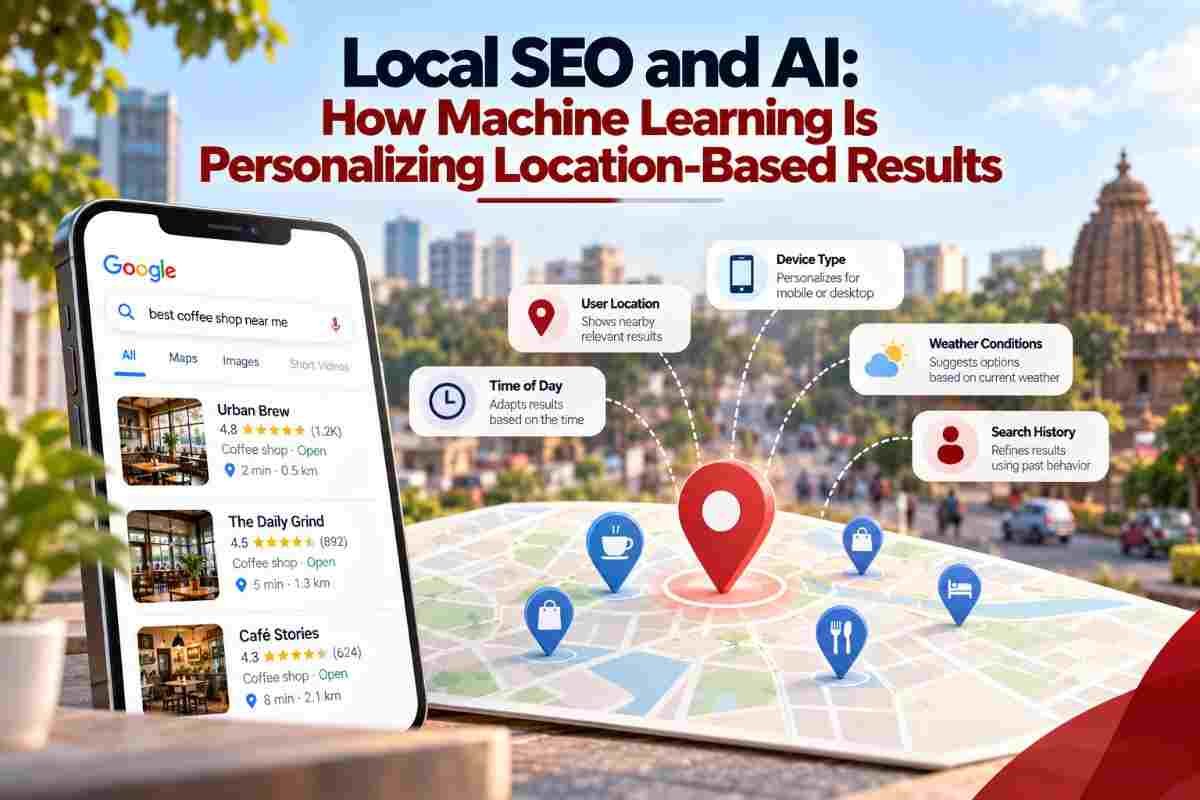
How AI is changing what appears in local search results and what Odisha businesses can do to stay visible.
[ Table of Content ]
When it comes to effectively utilizing artificial intelligence, Odisha students are falling behind, even as India builds digital momentum. Consider this: 73% of Odisha college students say they wish to learn AI tools, but only 12% have actually used them. That is a career risk for individuals and a massive unmet opportunity for the state.
Familiarity with tools like ChatGPT, Canva, and Notion is no longer optional as AI transforms every industry from agriculture to governance to finance. This article explains why AI and digital skills matter for Odisha's workforce right now, which training initiatives are closing the gap, and which career fields students should be preparing for today.
The Core Gap
73% of Odisha college students want to learn AI tools. Only 12% have used them. Bridging that gap is the most important workforce development priority the state faces right now.
Why AI Literacy Matters Urgently in Odisha
Odisha stands at the intersection of a rapidly changing digital landscape. Artificial intelligence is influencing governance, education, and industry more every year. Without widespread AI literacy, communities risk falling behind on employment, innovation, and informed decision-making.
The global picture is clear. 42% of businesses worldwide have already implemented AI. Another 40% are actively testing it. India's AI market is expected to more than triple by 2027. For students entering the workforce, AI skills are no longer a differentiator. They are a baseline requirement.
Odisha is responding. The state has enacted an AI Policy for 2025, established AI Missions, assigned AI officers to all government agencies, and begun integrating AI modules into school curricula. This is a meaningful foundation. But the infrastructure investment is outpacing student adoption, and that gap needs to close quickly.
The Employment Stakes
At present, 85% of students in Odisha cannot use AI tools. That is not just a skills gap. It is an employability gap. Employers across industries are beginning to screen for basic AI fluency, even in roles that are not traditionally tech-focused. A journalist who can use generative AI to draft, research, and localise content. A farmer-facing advisor who can interpret satellite data from an agritech platform. A government officer who can navigate AI-assisted citizen services. These are the roles that are opening up, and they require digital confidence, not just technical degrees.
For a state with Odisha's natural resources, cultural wealth, and young population, adopting AI literacy guarantees youth employability, smarter businesses, and genuinely inclusive growth. The foundation must be built today. Understanding how digital marketing and technology intersect with local economies is one place to start.
The Awareness Gap and What Is Being Done About It
Awareness gaps slow progress not just in technology but in health, education, and career planning. When students do not know what AI can do for them in their specific field or in their own language, they do not seek it out. Structured training closes that distance by making knowledge accessible to everyone, not just those with elite access.
Government-Led AI Training Initiatives in Odisha
Several significant programs are already in motion. Odisha's AI for Youth Program provides free six-month training in AI applications through government-run schools, focused on raising awareness and encouraging early involvement among secondary and college-level students.
The state has launched broad digital readiness programs alongside skill-building projects like BharatNetra, which focuses on fintech and insurtech, two sectors with high growth potential and strong local need in Odisha's underserved communities. Students trained here can enter roles in financial inclusion, insurance technology, and payment infrastructure, all sectors where demand is outpacing supply of trained talent.
In partnership with Microsoft and the NIIT Foundation, the Project Future Ready Skills initiative is offering free AI, web development, and data analytics training to 2,000 Odisha students, with 50% female participation built in as a requirement. This is an important design choice: AI literacy must be distributed equally across gender if the benefits are to reach the full population.
At the governance level, state employees are now required to complete online AI training modules, building AI competence across public administration and creating demand for AI-skilled workers in government roles.
What These Programs Show
Odisha is not waiting for the private sector to lead. The government is investing in AI literacy as infrastructure, the same way it invests in roads and power. Students who take advantage of these programs now will have a genuine head start.
The Numbers That Make the Case for AI Adoption
Data collected from Odisha college students paints a picture of eager, underserved learners. 73% say they would like to learn how to use AI tools. Only 12% have done so. The distance between intent and action is not a lack of motivation. It is a lack of access, in terms of language-appropriate resources, structured guidance, and visible application to their own lives and fields.
Globally, the picture is also instructive. According to the Digital Education Council, 86% of students worldwide already use AI tools for coursework, yet 58% still do not feel prepared for an AI-driven career. The learning curve is real even where usage is high. For Odisha students, closing the usage gap comes first. The confidence gap can be closed through practice.
These numbers tell a clear story: Odisha students are motivated, not indifferent. What they need is access to training in formats and languages they can actually engage with, connected to career outcomes they can actually see.
What Students and Educators Must Do Now
Awareness is a first step. The next step is action, and it needs to happen at the level of institutions, educators, and individual students simultaneously.
For Educational Institutions
Colleges and ITI programs across Odisha should incorporate AI skill modules directly into existing courses rather than treating them as optional extras. The goal is not to turn every student into a machine learning engineer. It is to ensure that a marketing graduate can use AI analytics, an agriculture student can interpret drone data, and a journalism student can use generative AI responsibly.
Hosting AI hands-on labs using tools like ChatGPT, Canva, and Notion, delivered in Odia or Hinglish, removes a significant language barrier. These workshops do not require large budgets. They require instructors who have used the tools themselves.
For Students
Student-led study circles for exploring AI tools and digital projects are among the most effective learning environments for this kind of skill. Peer learning accelerates confidence in ways that formal instruction cannot always match. Communities like the #AIinOdisha online challenge offer a starting point for students who want to experiment and get recognition for their work.
Career counselling also needs to be updated. Students need visible examples of how AI applies in journalism, agriculture, and fintech, not just in technology companies. A student who understands that an agritech startup needs someone to interpret satellite imagery, not write code from scratch, can see themselves in that role.
Understanding how digital skills connect to business outcomes is part of this shift. SEO and content strategy roles, for instance, now require working knowledge of AI writing tools, keyword research platforms, and data interpretation. These are learnable skills, not gatekept specialisms.
Career Fields Being Transformed by AI in Odisha
AI is not one industry. It is a capability layer being added to every industry. In Odisha, five sectors are particularly significant.
1. Digital Marketing and Design
Content creation, social media, and brand design have been reshaped by AI tools. Canva's AI features allow students with no formal design training to produce professional-quality visuals. AI analytics platforms can tell a marketing professional exactly which content drove results and why. Businesses in Bhubaneswar and across Odisha that invest in local digital marketing are actively looking for talent that can manage these tools.
For students, this means portfolios can now be built without expensive equipment or formal employment. Anyone with internet access and time can produce AI-assisted work that demonstrates real capability.
2. AgriTech and Smart Farming
Agriculture remains central to Odisha's economy, and it is being transformed from the ground up. Drones are now used for precision spraying and crop health monitoring. Satellite data services allow farmers and agritech companies to track conditions at scale. AI-powered weather forecasting and crop disease detection are becoming standard tools for any serious agritech operation.
Students who combine domain knowledge of farming with data literacy and AI tool proficiency are in an exceptionally strong position. This is an area where Odisha's geographic and agricultural context is an asset, not a disadvantage.
3. Financial Technology (Fintech)
The BharatNetra and IGFTCH initiatives reflect a growing need for AI-skilled workers in payment systems, insurance underwriting, and financial inclusion programs. These are not niche roles. India's push toward digital payments and financial access in underserved communities creates sustained demand for people who understand both the technology and the local context. Odisha students who can work at that intersection have a significant advantage.
4. Government and Governance
The Odisha AI Mission is creating a new category of public sector role: professionals who can support AI-enabled governance, digital citizen interfaces, and data-driven policy. These roles require AI literacy but not necessarily engineering degrees. A political science graduate who can navigate AI-assisted service delivery systems is exactly the kind of talent the state government is building capacity for.
5. Academic and Creative Content
Writers, researchers, and educators in Odisha can use ChatGPT, Notion, and generative AI tools to create content, develop curricula, and produce research, including work in Odia. The ability to use AI to localise content, generate first drafts, and analyse documents is already a standard expectation in many content-focused roles. For students interested in media, education, or publishing, this is one of the most immediately accessible entry points into AI-augmented work.
How to Measure Progress in AI Literacy Across Odisha
Counting workshop attendance is not enough. Real impact requires tracking whether people can actually apply what they have learned. Odisha's AI literacy programs need to evaluate baseline knowledge, post-training improvement, and the capacity to use AI tools in real situations.
Useful metrics include student AI usage surveys expanded across more college campuses, AI access metrics tracking enrollment in programs like AI for Youth and BharatNetra, placement outcomes showing whether students enter AI-enabled roles in the public or private sector, and portfolio submissions demonstrating work created with AI tools.
Success looks like students building things, not just attending sessions. The shift from passive awareness to active use is the metric that matters most, and it requires feedback loops, not just enrollment numbers.
Conclusion: The Time to Act Is Now
The future of employment in Odisha depends on more than knowing what AI can do. It depends on knowing how to apply it. Despite 73% interest among students, only 12% are currently using AI tools. That gap is not a technology problem. It is an access, awareness, and language problem that requires targeted action from institutions, educators, and communities.
Free tools like Canva, Notion, and ChatGPT are available today. Government programs like AI for Youth, BharatNetra, and Project Future Ready Skills are expanding reach. What is needed now is for students to move from interest to use, and for institutions to make that transition as easy as possible.
Odisha has already started. The AI Policy, the fintech initiatives, and the skills programs are real commitments. The next chapter depends on students and educators seizing those opportunities before they are left behind by a workforce that is already moving.
At Oddtusk, we are committed to building the workforce of tomorrow, today. Through mentorship programs, localized AI toolkits, and training programs designed specifically for Odisha's youth, we are working to close the digital divide. Because when students learn how to use AI, they do not just find jobs. They create opportunities, build confidence, and make an impact. Future professionals in Odisha are ready to shine. Let us work together to make it happen.
AI skills are critical for Odisha students because 42% of businesses worldwide have already implemented AI and another 40% are testing it. India's AI market is expected to more than triple by 2027. Students who cannot use tools like ChatGPT, Canva, or Notion risk being left behind in every industry, from agriculture to government to creative content. Despite 73% of Odisha college students expressing interest, only 12% have actually used AI tools, creating a serious career risk for the majority.
Several programs are already running. Odisha's AI for Youth Program provides free six-month training in AI applications through government-run schools. The BharatNetra project focuses on fintech and insurtech skill-building. Microsoft and the NIIT Foundation's Project Future Ready Skills offers free AI, web development, and data analytics training to 2,000 Odisha students, with 50% female participation. State government employees are also required to complete online AI training modules to build capacity across public administration.
Five career fields are being significantly transformed: Digital Marketing and Design (AI tools for content, visuals, and analytics), AgriTech and Smart Farming (drones, satellite data, AI-powered weather forecasting and crop disease detection), Financial Technology (AI in payment systems, insurance, and financial inclusion through BharatNetra), Government and Governance (public sector roles supporting the Odisha AI Mission), and Academic and Creative Content (using ChatGPT, Notion, and generative AI for writing, research, and curricula in Odia and English).
Odisha AI Policy 2025 is the state government's official framework for building an AI-ready ecosystem. It includes establishing AI Missions, assigning dedicated AI officers to all government agencies, and integrating AI learning modules into school curricula. The goal is to ensure that Odisha's students, citizens, and public servants are prepared for an AI-driven economy and can participate actively in India's digital growth rather than being bypassed by it.
Students can start with ChatGPT for writing and research, Canva for AI-assisted design, and Notion for productivity and content organisation. Government programs like AI for Youth and Microsoft's Project Future Ready Skills provide structured, free training. Students can also join peer-led study circles, participate in the #AIinOdisha challenge online, and attend AI hands-on labs delivered in Odia and Hinglish to lower the language barrier.
Globally, 86% of students use AI tools for coursework but 58% still feel underprepared for AI in their careers. In Odisha, the gap is more severe: 73% of college students say they want to learn AI tools, but only 12% have done so, meaning 85% remain unable to apply AI in their work. This local gap is significantly wider than the global average and highlights an urgent need for accessible, language-appropriate training at scale in Odisha.
AI is transforming Odisha agriculture through drone technology for crop monitoring and precision spraying, satellite data for tracking crop health at scale, AI-powered weather forecasting to support planting decisions, and image-recognition tools for early crop disease detection. Students who combine agricultural knowledge with digital and AI skills are in an exceptionally strong position to work in agritech companies or government programs addressing food security and farmer income across the state.
Educators can incorporate AI skill modules into college courses and ITI programs without needing large budgets. Practical steps include hosting AI hands-on labs using ChatGPT, Canva, and Notion in Odia or Hinglish, creating student-led study circles for peer learning, and updating career counselling to show how AI applies across journalism, agriculture, and fintech. Teachers can also use AI to generate lesson plans, localise content, and create multilingual educational materials, making AI directly relevant to students' own lives and career paths.
