
Learn how AI systems read and extract your content and how to structure it for maximum visibility.

Ranking Isn't Enough: Why AI Overlooks Your SEO
Date: 03 - 02 - 2026
Time to read: 6 minutes
Introduction
For almost 20 years, getting your web page to the front of a search engine results page was the biggest ambition in digital marketing. Besides guaranteed visits, there was a direct correlation with increasing revenue and higher sales conversion rates. Hitting the number one spot in Google rankings was marketing gold.
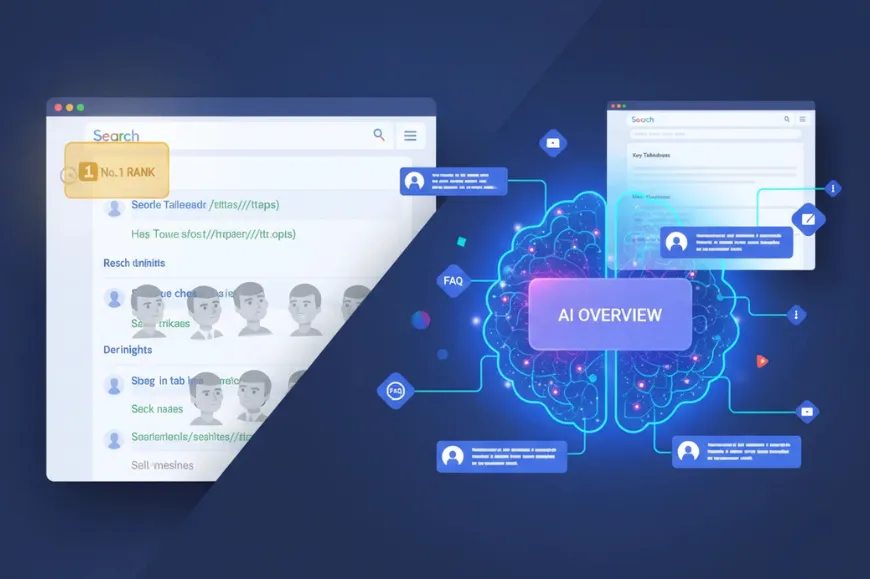
Nowadays, the traditional way of ranking and generating web traffic is losing its position. Welcome to the era of "zero-click search", where AI-powered platforms like Google's AI Overviews, ChatGPT, and Perplexity do the work of sifting through information and presenting it instantly to the user. The only way to keep your brand in the picture is to go for AI SEO optimization so that your content is not bypassed by automated summaries.
Just having a great position at the top of organic search results is no longer sufficient. You can be ranked first on a search engine results page, and an AI assistant might still completely ignore your site. This is because the nature of search has fundamentally changed. It is no longer a list of links but a full-fledged array of answers. Brands that want to thrive must shift their attention to answer engine SEO as their new source of customer acquisition.
Suggested article:What AI Visibility Means in 2026: A Complete Guide
The Shift from Indexing to Interpretation
The main difference between old-style search and the present environment is in the way information is processed. Old SEO was mainly about being indexed; today, being seen is about being understood. Search engines in the past tried to spot keywords and backlinks to determine rank. Nowadays, AI models search for meaning and context to determine whether you are a reliable source of an answer.
This transition explains why AI SEO optimization is the leading-edge brands' main concern. AI models don't simply scan your words. They understand your intent. If your article is buried beneath dull headings without a clear information hierarchy, the AI will skip you and choose a competitor who has organised their information for extraction.
In 2026, being seen is no longer a position. It is a reference. This is the foundation of any serious AEO and GEO optimization strategy, and it starts with understanding how semantic SEO structures content for machine comprehension.
Suggested article:Cracking the AI Code: How LLMs Interpret Content & Structure for AI Search Success
Why Answer Engine SEO Is the New Standard
As more users switch to conversational interfaces, the "Answer Engine" has superseded the "Search Engine." This has given rise to a specialised discipline called Answer Engine SEO (AEO). Whereas traditional SEO is primarily about generating traffic to a URL, AEO is about embedding your brand's knowledge into the AI-generated answer itself.
Answer Engine SEO works through three core principles:
- Snippet-Ready Formatting. Content should be segmented into extractable chunks that an AI can immediately lift and use, such as bullet points, numbered lists, and short definitions.
- Direct Answer Logic. Your content should not dance around an issue but instead reveal the answer immediately. AI engines prefer the inverted pyramid style: conclusion first, evidence later.
- Semantic Depth. Answer engine SEO demands topical authority. It is not sufficient to target a keyword. You must discuss the related subtopics and intent clusters that demonstrate you are a thorough subject matter expert.
The Danger of Vanity Rankings
Many companies continue to celebrate high rankings for general keywords, not realising that such rankings are generating far less traffic than three years ago. When an AI summary dominates a top search result, organic click-through rates can decline by up to 60%. These are the vanity rankings. They may appear impressive in a monthly report, but they no longer reliably deliver leads or revenue.
Your AI SEO strategy should therefore focus more on high-intent queries. You want your brand to be the one a user refers to when they ask: "Which is the best service for X?" or "How do I fix Y?" It is more beneficial to be the authoritative reference quoted in a ChatGPT answer than to rank first for a generic keyword that AI will summarise without directing the user to your site.
Strategic conversion rate optimization ensures that when traffic does arrive, it converts effectively, making every visit count.
Suggested article:Authority Is the New SEO: How Reddit and Quora Power AI Visibility
Technical Foundations for AI Visibility
If you want to ensure the brain of the internet does not overlook you, you have to communicate in its language. This implies a much deeper level of technical hygiene than traditional SEO has ever required.
- Advanced Schema Markup. The use of FAQ, HowTo, and Review schema markup is no longer optional. It serves as a translator, converting your text into structured data that machines can interpret with complete certainty.
- Natural Language Processing (NLP) Alignment. AI SEO optimization now requires writing in a way that mirrors how people naturally talk and ask questions, not keyword-stuffed paragraphs built for crawlers. This is what entity SEO operationalises at scale.
- E-E-A-T Signals. AI systems check your brand reputation by cross-referencing it with the broader web. If your leadership bios, citations, and reviews are not consistent, AI will detect a trust gap and prefer a more verified entity. Building these signals is the core of E-E-A-T optimization.
A thorough technical SEO audit is the best starting point for identifying exactly where your site falls short of AI readability standards.
Key Takeaways for the AI Era
- Visibility Over Traffic. Getting a mention in an AI Overview is the new Position Zero. The emphasis should be on becoming a cited source, not just earning a link.
- Structure Is Essential. Use proper headings, Q&A sections, and schema markup to make your content immediately understandable for AI crawlers.
- Intent Is King. Concentrate on optimising for "Why" and "How" questions instead of broad, single-word keywords.
- E-E-A-T More Than Ever. AI systems evaluate your credibility based on your entire web presence. Make sure your brand signals are trustworthy and consistent.
- AEO Is the Plan. Implement answer engine SEO by giving a direct, concise answer to the question right at the beginning of your content.
- Freshness Is a Signal. Keep your facts, statistics, and insights updated. AI engines give more weight to recent, verified information over stale evergreen content.
Suggested article:Predictive SEO: How to Anticipate Algorithm Changes Before They Happen
Conclusion: Bridging the Gap with Oddtusk
The transition from a link-based web to an answer-based web is the most significant change in digital history. It demands a shift in marketing approaches, from volume-based to value-based authority. If your present approach is still solely centred on traditional rankings, you are putting your brand's future at the mercy of an algorithm that is evolving faster than reactive strategies can follow.
At Oddtusk, we specialise in making this shift. We understand that AI SEO optimization is not about tricking the system. It is about bringing your brand in line with the new mode intelligence operates. Our professionals are answer engine SEO specialists who ensure your company is not merely one among other search results, but rather the answer offered by the AI.
We give you a digital presence that is easily understood by machines, consistent with user needs, and above all, trustworthy. From AEO and GEO optimization and semantic SEO to content marketing and eCommerce SEO, our full suite of digital marketing services is built to make your brand the answer AI recommends. Let's talk about making that happen.
